What the Book Covers
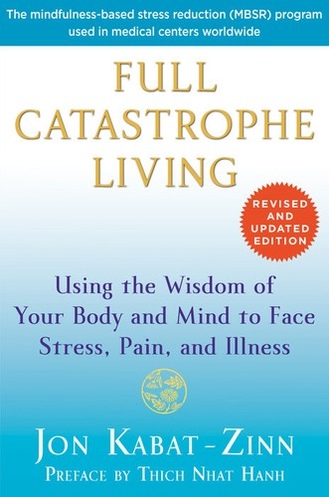
"Full Catastrophe Living" is the official manual of Mindfulness-Based Stress Reduction (MBSR): the program Jon Kabat-Zinn developed at the University of Massachusetts Medical School that literally revolutionized how medicine and psychology approach suffering.
The book doesn't preach meditation as a spiritual escape. Instead, Kabat-Zinn presents it as a practical, evidence-based skill for rewiring how your nervous system responds to stress, pain, illness, and life's inevitable crises. You'll learn:
- The neuroscience of mindfulness: How paying attention shifts your brain's threat-detection systems and builds emotional resilience
- An 8-week MBSR protocol: The exact meditation practices, body scans, and mindful movement sequences from the clinic
- Pain and illness reframing: Not "curing" suffering away, but changing your relationship to it so it has less power over you
- Practical applications: Managing anxiety, insomnia, high blood pressure, chronic back pain, cancer-related distress, immune function
- Secular mindfulness: Meditation stripped of religious baggage: this is the book that made mindfulness mainstream in the West
Kabat-Zinn includes actual meditation scripts, timeline exercises, and real patient stories. You're not reading about mindfulness; you're being trained in it.
Who Should Read This
This book is for you if:
- You're stuck in a stress-pain-anxiety loop and traditional medicine hasn't solved it
- You experience chronic pain, illness, or have a serious diagnosis you're learning to live with
- You're skeptical of meditation but willing to try something evidence-backed
- You want to understand the science behind why sitting still actually changes your physiology
- You're ready to invest real time: this isn't a book to skim; it's a program to work through
This is not a quick self-help fix. If you want "7 breathing tricks for instant calm," look elsewhere. But if you want to fundamentally retrain how your mind and body handle adversity, this is the foundational text.
Strengths and Weaknesses
What makes it extraordinary:
The research is undeniable. MBSR has been studied for 40+ years and shows measurable improvements in stress hormones, blood pressure, immune function, pain perception, and emotional regulation. This isn't anecdotal: it's what convinced hospitals, clinics, and insurance companies to take mindfulness seriously.
The tone is compassionate without being touchy-feely. Kabat-Zinn respects your intelligence and skepticism. He acknowledges the paradox: you can't force mindfulness, yet you must practice discipline. He doesn't sell meditation as enlightenment or magic: he presents it as a skill that works because of how neurobiology functions.
The practical anchoring is gold. Other mindfulness books stay theoretical. This one gives you the actual meditation scripts, the exact timing (body scan: 45 minutes), and guidance for what to do when your mind wanders (it will: that's the whole point). You can follow this book and actually do the program.
The revised 2013 edition updates the research to reflect 13 more years of neuroscience studies, making the science feel current without rewriting the core insights.
Where it struggles:
At 720 pages, it's an investment. The book repeats concepts across chapters in ways that, for some readers, feel like padding. You could argue it's teaching through reiteration (important for habit-building), but it can also feel slow.
The density means you can't skim this. Every chapter builds on the last. Starting in the middle won't work; this is a front-to-back read.
Some readers find the science chapters interrupt the narrative flow. If you want inspiration and practical tips without the neurobiology, you might prefer a lighter mindfulness introduction, but then you miss the why, which is what makes MBSR so credible.
Final Verdict
"Full Catastrophe Living" is the book that made mindfulness real in Western medicine. It's not trendy wellness: it's the evidence-based foundation that every modern mindfulness program descends from.
If you're dealing with chronic stress, pain, illness, or anxiety, and you're willing to actually practice (not just read about) mindfulness, this book will change how your body and mind respond to hardship. The research backs it. The patients in the book back it. The fact that it's been in print for 30+ years and is still prescribed by doctors backs it.
This is core Mind Wobble material: it's about healing your relationship with mental and physical suffering through science, practice, and self-compassion. It requires real work, but the payoff (living with greater presence, resilience, and peace amid life's difficulties) is worth every page.
Read it if: You're serious about understanding and changing how you handle stress, pain, or illness.
Skip it if: You want quick tips instead of a genuine practice protocol.
This book is: The foundational text of modern mindfulness. Not hype. Not trends. Real science meeting real suffering and showing a way through.