What the book covers
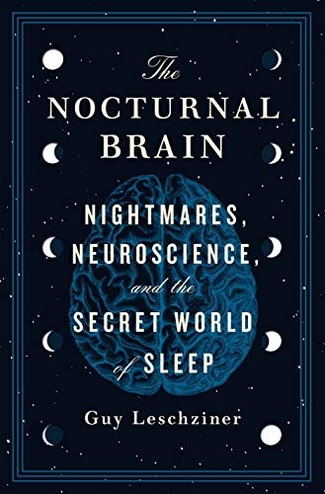
Dr. Guy Leschziner takes you on a journey through the nocturnal brain: the part of your neurology that's active while you sleep. Rather than a dry textbook, he presents this through the eyes of real patients dealing with sleep disorders. You'll encounter people who scream in their sleep, those who sleepwalk and wake with no memory, people tormented by nightmares, and individuals whose sleep systems have gone catastrophically wrong. Each case becomes a window into how the brain actually works during sleep.
The book explores parasomnias (unwanted behaviors during sleep), the neuroscience of nightmares, the mechanics of REM sleep, and conditions like narcolepsy and REM behavior disorder. Leschziner, a professor of neurology and sleep medicine at Guy's Hospital in London, walks you through the fascinating, sometimes terrifying, gap between what we think happens when we sleep and what's actually happening in the brain. He explains how deep sleep disruption causes different parts of the brain to wake at different rates, and why this creates such bizarre and sometimes dangerous behaviors.
Who should read this
This book is perfect if you're curious about sleep science and want to understand sleep disorders beyond pop psychology. You don't need a medical background. Leschziner is skilled at explaining complex neurology in accessible language. If you've ever experienced a nightmare so vivid it haunted you, sleepwalked, or known someone with a sleep disorder, this book will answer questions you've always wondered about.
It's also invaluable for healthcare professionals, psychology students, or anyone working in sleep medicine who wants a narrative-driven introduction to clinical sleep neurology. General readers interested in neuroscience, psychology, and the biology of consciousness will find plenty to fascinate them.
Strengths and weaknesses
The book's greatest strength is Leschziner's gift for storytelling. He doesn't present sleep disorders as abstract diagnostic categories: he shows you the human face of each condition. A man whose night terrors leave him violent and confused. A woman whose sleep paralysis traps her in her own body. These aren't case studies; they're people, and their stories stick with you. This approach makes the neuroscience visceral and memorable.
The science itself is rigorous without being pedantic. Leschziner clearly knows his subject inside and out, yet he trusts his readers enough to avoid dumbing things down. His explanations of REM sleep, the peculiarities of how body temperature fails us during REM, and the neural mechanisms of sleep-wake cycles are genuinely enlightening.
That said, the book has minor limitations. While Leschziner excels at describing what goes wrong, he's somewhat less expansive on treatment options. A few chapters repeat similar points about sleep physiology: useful for retention, perhaps, but occasionally redundant. And if you have no science background whatsoever, some passages on neural mechanisms might require a second read.
Final verdict
"The Nocturnal Brain" is essential reading for anyone serious about understanding sleep science. Leschziner succeeds where many popular science writers fail: he makes neuroscience compelling without sacrificing accuracy. The patient narratives ground complex physiology in emotional reality, and the writing style feels like a conversation with an expert who genuinely wants you to understand.
The consensus from medical journals, Kirkus Reviews, and thousands of readers on Goodreads confirms this: a book that educates, fascinates, and sometimes unsettles. Whether you're dealing with your own sleep issues, curious about neuroscience, or just fascinated by the strange things that happen in our brains at night, this book delivers.
If you've ever wondered why your dreams feel so real, why some people thrash about in their sleep, or what happens in the brain when sleep goes catastrophically wrong, this is the book that answers those questions with both scientific rigor and genuine humanity.