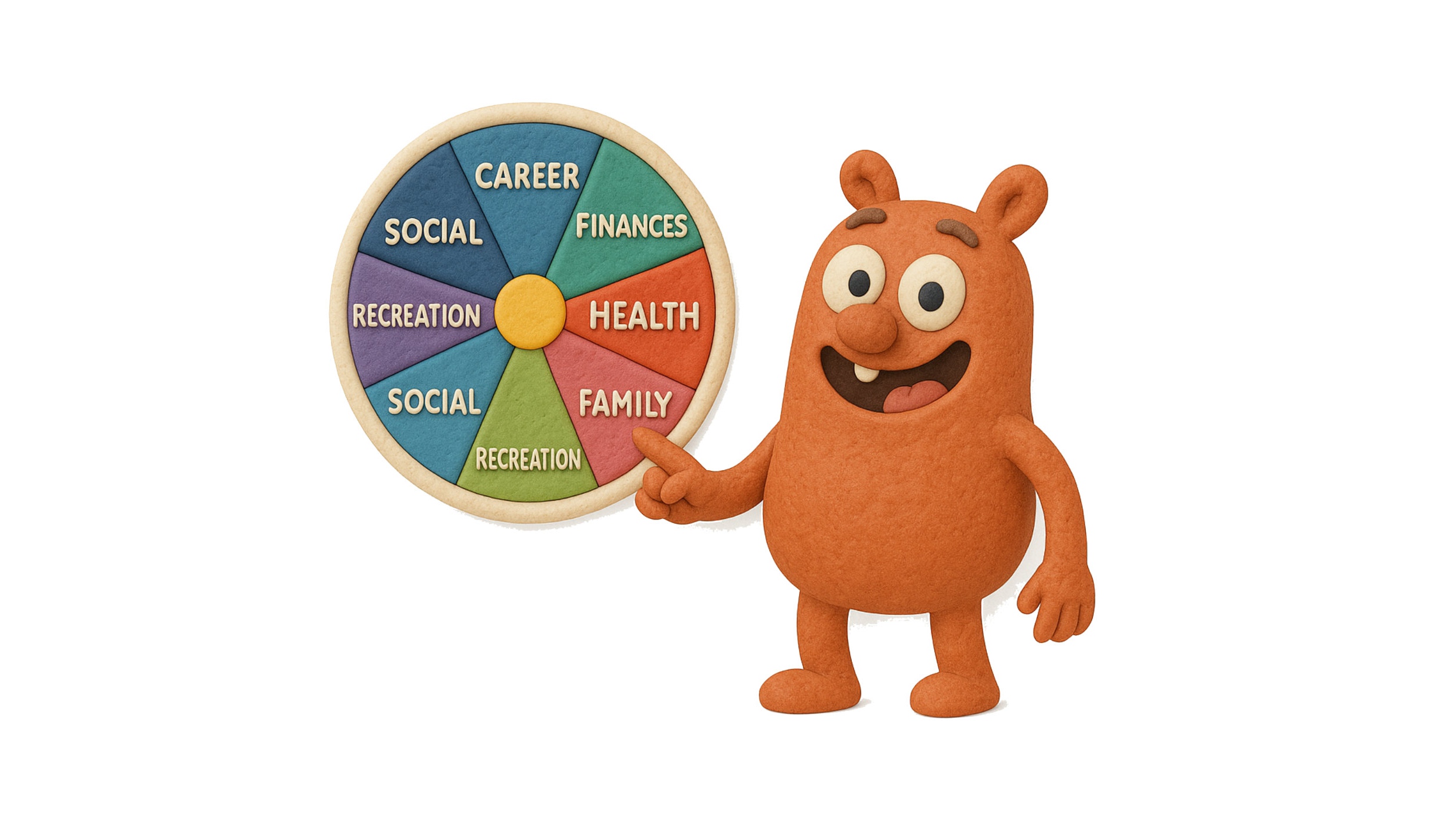
Ever feel like you're juggling a million things and dropping half of them? Or maybe you're crushing it at work but your love life is drier than the Sahara? That's where the Wheel of Life comes in. It's a simple yet powerful tool used in life coaching to help you visualise and assess your satisfaction in various key areas of your life.
Imagine a wheel (duh!). This wheel is divided into slices, each representing a different aspect of your life. Common categories include things like career, finances, health, relationships, personal growth, fun & recreation, physical environment, and spirituality. The beauty of the Wheel of Life is that it's customisable! You can tweak the categories to perfectly reflect what really matters to you.
The core idea is simple: you rate your satisfaction in each category on a scale, usually from 1 to 10, with 1 being "totally miserable" and 10 being "living the dream!" Once you've rated each slice, you connect the dots, and voila! You have a visual representation of your life's balance (or lack thereof). A perfectly round wheel indicates a balanced life, while a lopsided wheel highlights areas that need some TLC.
Why Bother Spinning the Wheel? The Benefits Unveiled
So, why should you spend your precious time rating your life on a wheel? Well, the benefits are surprisingly numerous and can have a real impact on your overall well-being.
- Self-Awareness Booster: The Wheel of Life forces you to take a good, hard look at your life. It's like holding up a mirror and saying, "Okay, what's really going on here?" This increased self-awareness is the first step towards making positive changes. You can't fix what you don't acknowledge, right?
- Goal-Setting Supercharger: Once you've identified the areas where you're feeling less than stellar, you can start setting realistic and meaningful goals. Instead of vague resolutions like "be happier," you can focus on specific areas like "improve my relationship with my partner" or "dedicate more time to my hobbies."
- Prioritisation Powerhouse: We all have limited time and energy. The Wheel of Life helps you prioritise where to focus your efforts. If your career is a 9 but your health is a 3, it might be time to shift some energy from work to workouts.
- Motivation Magnet: Seeing your progress on the Wheel of Life can be incredibly motivating. As you start making positive changes and see your scores improve, you'll feel a sense of accomplishment and be more likely to stick with your goals.
- Stress Reducer: Ironically, taking the time to assess your life can actually reduce stress. By identifying the sources of your stress and creating a plan to address them, you'll feel more in control and less overwhelmed.
- Improved Decision Making: When faced with choices, the Wheel of Life can help you make decisions that align with your overall life goals. For example, if you're considering a new job, you can assess how it will impact each area of your life before making a decision.
The Dark Side of the Wheel: Potential Pitfalls to Avoid
Now, before you get too excited and start spinning your wheel like a contestant on Wheel of Fortune, let's talk about the potential downsides. Like any self-assessment tool, the Wheel of Life isn't perfect, and it's important to be aware of its limitations.
- Subjectivity Alert: The Wheel of Life is based on your perception of your life, which can be influenced by your mood, biases, and current circumstances. What feels like a 7 today might feel like a 5 tomorrow.
- Overthinking Overload: It's easy to get caught up in the details and overanalyse each category. Remember, the goal is to get a general overview, not to achieve perfection. Don't let the Wheel of Life become another source of stress!
- Comparison Trap: It's tempting to compare your Wheel of Life to others, but resist the urge! Everyone's life is different, and what matters most is your own personal growth and happiness.
- False Sense of Security: Just because your wheel looks balanced doesn't mean everything is perfect. It's important to remember that the Wheel of Life is just a snapshot in time, and things can change quickly.
- Ignoring Underlying Issues: The Wheel of Life can help you identify areas where you're struggling, but it doesn't necessarily address the underlying causes. If you're consistently unhappy in a particular area, it might be time to seek professional help.
- Perfectionism Paralysis: Some people get so caught up in trying to achieve a perfectly round wheel that they become paralysed by perfectionism. Remember, life is messy and imperfect, and that's okay!
Crafting Your Own Wheel: A Step-by-Step Guide
Ready to create your own Wheel of Life? Here's a simple step-by-step guide to get you started:
- Choose Your Categories: Start by brainstorming the key areas of your life that are most important to you. Common categories include:
- Career: Your job, career path, and work-life balance.
- Finances: Your financial security, income, and spending habits.
- Health: Your physical and mental well-being, fitness, and nutrition.
- Relationships: Your relationships with your partner, family, friends, and colleagues.
- Personal Growth: Your learning, development, and self-improvement.
- Fun & Recreation: Your hobbies, interests, and leisure activities.
- Physical Environment: Your home, neighbourhood, and surroundings.
- Spirituality: Your connection to something larger than yourself, whether it's religion, nature, or a sense of purpose.
Feel free to add, remove, or modify these categories to fit your unique life. - Draw Your Wheel: Draw a circle and divide it into equal slices, one for each category. Label each slice with the corresponding category.
- Rate Your Satisfaction: For each category, rate your satisfaction on a scale of 1 to 10, with 1 being "totally dissatisfied" and 10 being "completely satisfied." Mark your rating on the corresponding slice of the wheel.
- Connect the Dots: Connect the dots to create a visual representation of your life's balance.
- Analyse Your Wheel: Take a good look at your wheel. Which areas are high? Which areas are low? What does your wheel tell you about your life?
- Set Your Goals: Based on your analysis, identify 1-2 areas where you want to focus your efforts. Set specific, measurable, achievable, relevant, and time-bound (SMART) goals for each area.
- Take Action: Start taking small steps towards your goals. Remember, progress is more important than perfection.
- Revisit Your Wheel: Revisit your Wheel of Life every few months to track your progress and adjust your goals as needed.
Beyond the Basics: Advanced Wheel Techniques
Once you've mastered the basics of the Wheel of Life, you can explore some more advanced techniques to get even more out of this powerful tool.
- The Ideal Wheel: Create a second wheel representing your ideal life. How would you rate each category if you were living your dream life? Comparing your current wheel to your ideal wheel can provide valuable insights into your aspirations and priorities.
- The Past Wheel: Create a wheel representing your life in the past. This can be helpful for identifying patterns and understanding how your life has evolved over time.
- The Future Wheel: Create a wheel representing your life in the future. This can help you visualise your goals and create a roadmap for achieving them.
- The Relationship Wheel: Create a wheel specifically focused on your relationships. This can help you identify areas where you need to improve your communication, connection, and intimacy.
- The Career Wheel: Create a wheel specifically focused on your career. This can help you identify areas where you need to develop your skills, network, or seek new opportunities.
Real-Life Examples: Wheels in Action
Okay, enough theory! Let's look at some real-life examples of how the Wheel of Life can be used to improve different aspects of your life.
- Sarah, the Stressed-Out Executive: Sarah was a high-powered executive who was constantly working long hours. Her Wheel of Life revealed that her career was a 9, but her health, relationships, and fun & recreation were all below 5. She realised that she was sacrificing her well-being for her career. She set a goal to work fewer hours and prioritise self-care. Over time, her health, relationships, and fun & recreation scores improved, and she felt much happier and more balanced.
- David, the Unfulfilled Student: David was a college student who felt lost and unfulfilled. His Wheel of Life revealed that his personal growth and spirituality were low. He realised that he needed to find a sense of purpose and meaning in his life. He started volunteering at a local charity and joined a meditation group. As he became more involved in these activities, his personal growth and spirituality scores improved, and he felt more connected and fulfilled.
- Emily, the Lonely Mom: Emily was a stay-at-home mom who felt isolated and lonely. Her Wheel of Life revealed that her relationships and fun & recreation were low. She realised that she needed to connect with other people and find activities that she enjoyed. She joined a moms' group and started taking a dance class. As she made new friends and pursued her interests, her relationships and fun & recreation scores improved, and she felt less lonely and more connected.
Mental Health Considerations: A Balanced Perspective
It's crucial to approach the Wheel of Life with a balanced perspective, especially when it comes to mental health. While it can be a valuable tool for self-assessment and goal-setting, it's not a substitute for professional help.
Potential Benefits for Mental Health:
- Increased Self-Awareness: The Wheel of Life can help you become more aware of your emotional state and identify areas where you're struggling with your mental health.
- Reduced Stress: By identifying the sources of your stress and creating a plan to address them, you can feel more in control and less overwhelmed.
- Improved Mood: As you start making positive changes and see your scores improve, you'll feel a sense of accomplishment and be more likely to experience positive emotions.
- Enhanced Resilience: The Wheel of Life can help you develop a more resilient mindset by focusing on your strengths and identifying areas where you can grow.
Potential Downsides for Mental Health:
- Increased Anxiety: If you're prone to anxiety, the Wheel of Life can trigger obsessive thinking and perfectionism.
- Depressed Mood: If you're already feeling down, seeing low scores in certain areas can exacerbate your negative feelings.
- Self-Criticism: It's easy to become overly critical of yourself when assessing your life on the Wheel of Life.
- Avoidance: Some people may avoid using the Wheel of Life because they're afraid of what they might discover.
Tips for a Mentally Healthy Approach:
- Be Kind to Yourself: Remember that the Wheel of Life is just a tool for self-assessment, not a judgment of your worth.
- Focus on Progress, Not Perfection: Don't get caught up in trying to achieve a perfectly round wheel. Focus on making small, sustainable changes over time.
- Seek Professional Help: If you're struggling with your mental health, don't hesitate to seek professional help from a therapist or counsellor.
- Use the Wheel as a Starting Point: The Wheel of Life can be a great starting point for exploring your mental health, but it's important to delve deeper and address any underlying issues.
Key Takeaways: Spinning Towards a Better You
So, there you have it! The Wheel of Life, demystified and ready for you to spin. Remember, it's not about achieving a perfect score in every category. It's about gaining self-awareness, setting meaningful goals, and taking action to create a life that feels balanced and fulfilling for you.
Here are the key takeaways to keep in mind:
- The Wheel of Life is a visual tool for assessing your satisfaction in different areas of your life.
- It can help you identify areas where you're thriving and areas where you're struggling.
- It's customisable to fit your unique life and priorities.
- It can be used to set goals, prioritise your efforts, and track your progress.
- Be aware of the potential pitfalls, such as subjectivity, overthinking, and comparison.
- Approach the Wheel of Life with a balanced perspective, especially when it comes to mental health.
- Be kind to yourself, focus on progress, and seek professional help if needed.
Now go forth and spin your wheel! And remember, life is a journey, not a destination. Enjoy the ride!