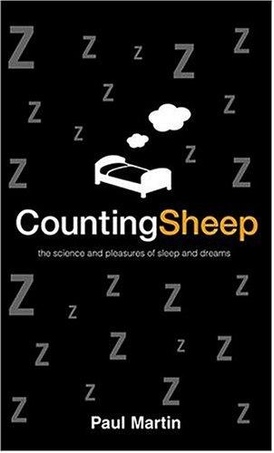
What the Book Covers
Paul Martin, a Cambridge-trained behavioral biologist with a PhD in the field, takes us on a comprehensive journey through the science of sleep in this surprisingly page-turning book. Counting Sheep tackles everything from the basics of why humans sleep to the neurobiology of dreams, sleep disorders, the dangers of chronic sleep deprivation, and even cultural variations in how different societies approach sleep.
The book opens with a disarmingly simple premise: we spend about a third of our lives sleeping, yet most of us understand remarkably little about what actually happens during those hours. Martin methodically dismantles common myths about sleep: that it's a period of inactivity, that dreams are meaningless, that you can simply "catch up" on lost sleep. Instead, he reveals sleep as an active, essential biological process with profound implications for every aspect of our waking lives.
Martin walks us through the architecture of sleep: the stages of light sleep, deep sleep, and REM sleep; how sleep cycles repeat throughout the night; why some people are larks and others are owls; and how sleep needs change across our lifespans. He explores what neuroscience has learned about why we dream, presenting compelling evidence that dreams aren't random noise but rather serve critical functions in memory consolidation, emotional regulation, and creative problem-solving.
A particularly compelling section addresses sleep deprivation's alarming effects. Martin draws chilling parallels between the impairment caused by sleep loss and alcohol intoxication, then illustrates real-world consequences in hospitals, courtrooms, and aircraft cockpits where sleep-deprived professionals make life-and-death decisions. This isn't abstract theory; it's about actual consequences for public safety.
The book also delves into sleep disorders: insomnia, sleep apnea, narcolepsy, sleepwalking, and offers insight into why modern culture's relationship with sleep has become so dysfunctional. Martin argues compellingly that the industrialized world's tendency to treat sleep as wasted time represents a dangerous disconnect from biological reality.
Who Should Read This
This book speaks to several audiences beautifully. If you're chronically sleep-deprived and wondering whether you really need that extra hour of sleep, Counting Sheep will convince you that quality rest is non-negotiable. If you're fascinated by how your brain works, Martin's exploration of sleep neurobiology scratches that intellectual itch while remaining accessible to non-scientists.
Insomnia sufferers will find validation here, not just reassurance, but actual understanding of what's happening in their bodies and why sleep matters so much. Parents worried about their children's sleep habits will gain perspective on how sleep impacts cognitive development and academic performance. And anyone who's ever wondered why they dream the things they do will find thoughtful, science-based explanations that respect both the mystery and the mechanism.
The conversational, almost intimate tone makes this work equally at home on a nightstand next to a sleep-deprived grad student or in the personal library of a sleep specialist seeking the kind of comprehensive-yet-accessible overview that's hard to find.
Strengths and Weaknesses
Martin's greatest strength is his ability to make sleep science genuinely compelling. He writes with clear passion for his subject without ever becoming pedantic. The prose flows naturally, and he breaks up purely scientific explanation with captivating anecdotes, historical references, and contemporary examples that ground abstract concepts in real experience.
His use of literary quotations (passages from Shakespeare, Coleridge, Dickens, Pepys, and others) serves a dual purpose. These references illuminate how humans have grappled with sleep and dreams across centuries, and they make the writing more engaging and memorable than it would be with science alone. When Martin quotes a 17th-century diarist's observations about poor sleep followed by modern sleep neurobiology, the connection between timeless human experience and contemporary science becomes visceral.
The comprehensive scope is also a strength. Rather than focusing narrowly on one aspect of sleep, Martin provides a genuine overview that touches on sleep's functions, its disruption, its cultural dimensions, and its future. This breadth makes the book feel authoritative without being overwhelming.
However, the book's reliance on historical examples is a double-edged sword. Some readers find the parade of literary and historical anecdotes occasionally distracts from the core scientific arguments. When you're five chapters deep in Shakespeare references, you might find yourself wishing for more direct focus on mechanism.
A second limitation is one of simple chronology. Published in 2004, some of Martin's scientific conclusions have been refined or revised as sleep research has advanced over the past two decades. This doesn't undermine the book's core insights, but readers seeking the absolute latest neuroscience might need to supplement with more recent sources.
Finally, the book is primarily text-based. Diagrams showing sleep architecture, illustrations of relevant brain regions, or charts displaying sleep cycle patterns would make some of the more technical sections even more accessible. For visual learners, this could be a minor frustration.
Final Verdict
Counting Sheep achieves something rare in popular science writing: it's simultaneously rigorous and genuinely entertaining, comprehensive and accessible, scientifically sound and deeply human. Martin respects both the complexity of sleep science and the patience of general readers trying to understand it.
The book's greatest value lies in shifting how you perceive sleep itself. Martin successfully argues (through evidence, example, and eloquent writing), that sleep isn't time wasted but time invested. That perspective shift alone is worth the read, but you'll also gain concrete understanding of your own sleep patterns, the real costs of chronic sleep deprivation, and why that elusive good night's rest is among the most important investments you can make in your health.
Whether you're a casual reader curious about why you dream or someone struggling with genuine sleep problems seeking understanding, Counting Sheep delivers. It's the kind of book that stays with you, perhaps even influencing your behavior long after you've finished. There's something almost subversive about a book on sleep that actually makes you want to prioritize getting more of it.
This is popular science writing at its finest: informative without being intimidating, engaging without sacrificing substance, and ultimately perspective-shifting. Martin proves that the science of sleep is every bit as fascinating as the experience of sleeping, and understanding it might just change how you spend a third of your life.