What the Book Covers
"Take a Nap! Change Your Life" is Sara Mednick's groundbreaking argument that napping isn't laziness: it's neuroscience. Written for the estimated 50 million exhausted Americans, this slim but mighty guide unpacks the physiology of sleep stages and shows exactly how a strategically timed nap can deliver cognitive, emotional, and physical benefits that rival a full night's rest.
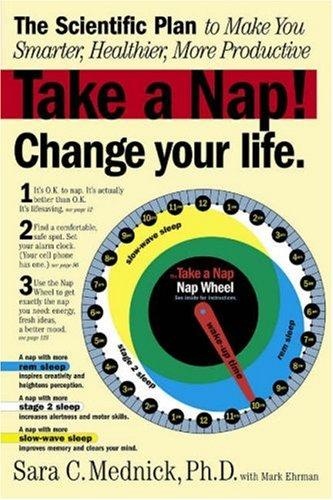
Mednick, a Salk Institute researcher with a Harvard Ph.D. in psychology, distills her lab findings into accessible guidance. The book explains what happens in each sleep stage (light sleep, deep sleep, REM), then connects that science to everyday needs. Need sharper thinking in two hours? Feeling creatively stuck? Trying to cement new motor skills? The Nap Wheel (a visual dial on the cover) tells you exactly when and how long to nap.
Beyond the wheel, you'll find:
- A practical, science-backed taxonomy of naps and their benefits
- A 16-step technique for actually falling asleep when you need to
- Myths about napping debunked with data
- Tips on creating the ideal nap environment
- A six-week napping workbook to experiment and track your results
The writing moves fast. No academic padding, no irrelevant case studies, just clear explanations of why your brain wants to nap and how to give it what it needs.
Who Should Read This
This book is essential for:
- Knowledge workers and students who need to sharpen memory and learning without hours of extra study
- Shift workers and sleep-deprived parents looking for legitimate ways to recover between sleep phases
- People trapped in the afternoon slump who've resigned themselves to 3 p.m. exhaustion
- Anyone curious about sleep science but turned off by dense textbooks
- Nap skeptics who think rest is a luxury they can't afford (spoiler: Mednick's research suggests you can't afford not to)
Less useful for hardcore insomniacs or people in cultures where napping is actively forbidden: the book assumes some agency around rest timing.
Strengths and Weaknesses
What works beautifully:
The Nap Wheel is genuinely clever. Rather than generic advice, it maps nap duration to sleep-stage benefits. Want a 20-minute power nap? You'll feel alert without grogginess. Aim for 60-90 minutes? You unlock the memory consolidation that normally takes a full night. This specificity elevates the book beyond "just take a nap."
Mednick's voice stays conversational even when discussing REM rebound and polyphasic sleep patterns. She makes neuroscience feel like something you already suspected: your body and brain are built for rest cycles, not eight-hour sprints followed by 16-hour marathons.
The research anchoring is solid. Her own studies, like the finding that people performed equally well on visual learning tests after a 90-minute nap as after a full night: appear in major outlets (Wall Street Journal, NPR, CNN), lending credibility.
What falls short:
The book was published in 2006. While sleep science hasn't been turned on its head, some citations and studies feel dated. More recent meta-analyses on napping would strengthen it.
The book focuses almost entirely on the individual napper and ignores the systemic barriers: how do shift workers nap? What about office cultures that penalize rest? What about neurodivergent folks with wildly atypical sleep needs? These questions hover around the edges but never get explored.
Finally, readers with diagnosed sleep disorders (insomnia, sleep apnea, narcolepsy) won't find targeted advice. The book assumes relatively healthy sleepers trying to optimize, not people fighting their own neurobiology.
Final Verdict
"Take a Nap! Change Your Life" is the rare self-help book that has serious science behind it and doesn't pretend to be more than it is. At 141 pages, it respects your time. The Nap Wheel alone justifies a read. And the central thesis, that rest is not indulgence but a cognitive and physical performance tool, lands harder with each page.
Readers consistently report that Mednick's advice works. They describe the book as "helpful," "practical," and "highly recommendable." Medical students, exhausted professionals, and curious nap experimenters all report success using the strategies and workbook.
If you've been guilt-ridden about naps, ashamed of afternoon fatigue, or skeptical that 20 minutes could matter, this book rewires your thinking. It won't solve systemic sleep deprivation (that's a society problem), but it will show you how to reclaim the rest your brain is actually asking for.
Recommended. Pick it up when you're tired and need permission to rest.