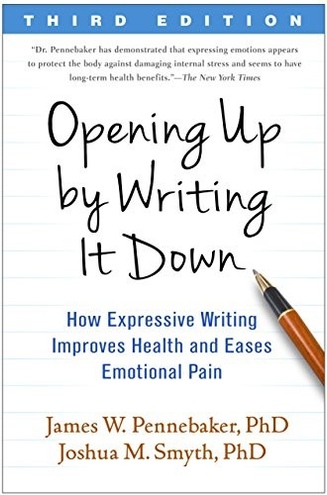
If you have ever sat with something heavy and felt the strange urge to write it down, this is the book that explains why that instinct is so wise. "Opening Up by Writing It Down" is not another journaling guide built on vibes and pretty prompts. It is the foundational, research-grounded account of expressive writing, written by the very person who discovered the effect in the first place. James W. Pennebaker spent decades running careful experiments showing that a few short sessions of honest writing can measurably change how people feel and even how their bodies function, and here, with co-author Joshua M. Smyth, he hands the evidence to you in plain language.
What the book covers
The premise is almost suspiciously simple. Sit down, write continuously for fifteen or twenty minutes about a difficult experience and the emotions wrapped around it, do this for three or four days, and good things tend to follow. Pennebaker stumbled onto this in the 1980s, and what makes the book compelling is that he did not just trust the warm glow people reported. He measured it. The chapters walk you through study after study showing reduced stress, improved mood, better immune markers, fewer doctor visits, and in some cases stronger relationships and clearer thinking.
Along the way you get the genuinely fascinating science of secrets and silence. There is a real, trackable cost to carrying something unspoken, and the book lays out how holding a trauma or a shameful memory inside quietly taxes the body over time. Pennebaker and Smyth explore why putting an experience into words seems to defuse it, and their best insight is that the magic is not in the venting. It is in the storytelling. People who improve most are not the ones who simply dump raw emotion onto the page, but the ones who, across a few days, start to build a coherent narrative, who move from chaos toward something that makes a kind of sense. The third edition folds in hundreds of newer studies and, crucially, a candid section on when the technique may not help at all.
Who should read this
This is the book for the person who has tried journaling and quietly wondered whether it actually does anything, or who is the type to ask for the receipts before committing. If you want to understand the mechanism, to know what the research really shows rather than what a wellness influencer claims it shows, you will feel at home here. Therapists, counsellors, and anyone working in mental health will find it especially valuable as a credible primer they can recommend without flinching.
It is also a kind book for people sitting on something hard. Without ever being preachy, it offers a low-cost, private, surprisingly powerful tool for emotional pain, no appointment or app subscription required. That said, if you are looking purely for a gentle deck of daily prompts and inspirational nudges, you may find this more textbook than companion. It rewards readers who do not mind a little science with their self-help.
Strengths and weaknesses
The great strength here is authority paired with honesty. You are reading the founder of an entire field, and he refuses to oversell. That integrity is rare in this genre. Where most journaling books promise transformation and leave it there, Pennebaker and Smyth tell you plainly that some people benefit enormously, others barely at all, and that pushing someone to write about a fresh trauma too soon can actually do harm. That willingness to mark the edges of the evidence is exactly what makes the parts they do endorse so trustworthy. The final stretch of the book, where they lay out a concrete writing protocol you can start tonight, is genuinely useful and worth the price on its own.
The weaknesses are mostly about texture. With more than fifty thousand copies in print and a steady stream of readers across three editions, the reception has been warm but consistent on one point. The middle of the book can feel dense. Some readers find it drags after the opening chapters as the studies stack up, and the tone leans more academic than the cosy, fireside voice you might expect from a book about emotional healing. None of this undermines the substance. It just means you may find yourself skimming a results section here and there to reach the human insight on the other side. Weighed against how much real, durable value sits inside, a 4.5 feels right. It loses half a point only because the reading experience occasionally asks more patience than a pure self-help reader bargained for.
Why this matters for mental health
This is about as direct a fit for proactive wellness as a book can be. Expressive writing is a free, accessible, evidence-backed practice that sits at the exact intersection this blog cares about, where emotional health and physical health meet. The research Pennebaker built shows that processing our hardest experiences on paper is not indulgent navel-gazing. It is a measurable form of self-care that can lower stress, lift mood, and even support the body's own healing. In a world of expensive wellness fixes, the idea that a pen, a few quiet minutes, and a willingness to be honest can move the needle on your wellbeing is both grounding and a little bit thrilling.
Final verdict
"Opening Up by Writing It Down" earns its place as the definitive guide to a practice that genuinely deserves the hype, precisely because its authors refuse to hype it. You come away understanding not just that expressive writing works, but why, for whom, and under what conditions, which means you can actually use it well instead of hoping. Yes, it asks a little patience through its denser stretches, but the payoff is a tool you keep for life. If you have ever wanted to turn a journal from a habit into something that measurably helps you, start here. Grab a copy, set aside fifteen minutes tonight, and let the founder of the field show you how a few honest pages can change how you feel.