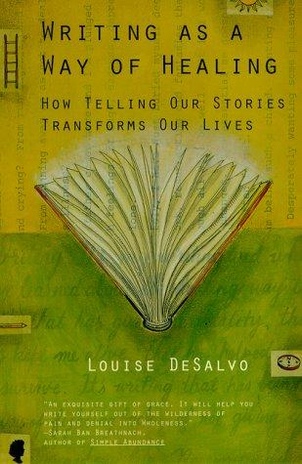
There is a particular kind of book that does not just tell you to write your way through pain, but explains, gently and with real authority, why that works and how to do it without making things worse. Louise DeSalvo's "Writing as a Way of Healing" is exactly that book. It has been quietly passed between therapists, memoirists, and people in the middle of hard chapters of their lives for more than two decades now, and once you read it you understand why it keeps getting handed along.
What the book covers
DeSalvo's central argument is bracing in its honesty: writing can heal, but the wrong kind of writing can hurt. This is not the breezy promise of most journaling guides. Drawing on twenty years of research, much of it building on the work of psychologist James Pennebaker, she lays out the difference between writing that genuinely repairs us and writing that simply churns up distress and leaves us stuck in it.
The distinction turns out to be specific. Pure venting, the kind where you pour out raw feeling with no shape to it, can actually reinforce a painful loop. What heals, she argues, is narrative: writing that links your emotions to the events that caused them, that includes concrete and authentic detail, that balances the dark with whatever light exists, and that reaches toward insight rather than just rehearsing the wound. In her memorable framing, the difference between a victim and a survivor is the meaning made of the trauma. Writing is how that meaning gets made.
Around this spine she weaves the lives of writers who used the page to survive their own histories. Virginia Woolf, Henry Miller, Audre Lorde, Isabel Allende, and others appear not as untouchable literary monuments but as people who wrote themselves through grief, abuse, illness, and loss. DeSalvo, herself a Woolf scholar and a memoirist, knows these stories intimately, and she uses them to show that the healing process she describes is not theoretical. It is what real writers have always done. The later chapters turn practical, offering guidance on getting started, building a writing practice, and handling the difficult feelings that surface when you put hard things into words.
Who should read this
This is a book for the person who senses that writing might help but does not quite know how to begin, or who has tried journaling and found it left them feeling worse rather than lighter. It is for memoirists circling a painful subject, for anyone working through grief or a difficult past, and for therapists and coaches who want to recommend expressive writing to clients with some confidence about what actually works.
It is less suited to readers who want a rigid, fill-in-the-blank workbook. DeSalvo writes like the literature professor she was, with digressions into craft and biography that reward patience but ask for it too. If you want prompts numbered one through fifty and nothing else, this may feel discursive. If you want to understand the why beneath the practice, it is close to ideal.
Strengths and weaknesses
The great strength here is balance. DeSalvo respects the science enough to build her whole method on it, but she never lets a study flatten the human texture of what she is describing. The research serves the story rather than the other way around, which is rarer than it should be in this corner of the self-help shelf. Her prose is warm and literate, and her willingness to say plainly that writing can be done badly, even harmfully, gives the encouraging parts real credibility. When she tells you that putting your story into words can transform your life, you believe her, because she has already shown you she is not selling easy comfort.
The weaknesses are mostly matters of fit and age. The literary lean that makes the book so rich can also make it feel indirect if you came for a structured program. And the science, while genuinely foundational, comes from the late 1990s; the expressive-writing field has grown considerably since, so think of this as the deep root rather than the latest branch. None of that undercuts the core method, which has aged remarkably well, but it is worth knowing going in.
I land on four out of five. It loses half a step for the lack of structure some readers will want, and another half for science that newer titles have since extended. What remains is a humane, beautifully argued, and genuinely useful book that earns its long shelf life.
Why this matters for mental health
The connection here could not be more direct. This is a book about healing through writing, and the mechanism it describes maps neatly onto what we know about processing difficult experience. When you translate a painful event into language, link it to how it made you feel, and shape it into a coherent story, you are doing something your nervous system can use. You move from being submerged in an experience to standing slightly outside it, able to look at it, name it, and begin to hold it differently. That shift, from raw feeling to made meaning, is much of what recovery looks like, whether it happens in a therapist's office or at your own kitchen table with a notebook. DeSalvo gives you a way to do some of that work yourself, safely and on your own terms.
Final verdict
"Writing as a Way of Healing" has lasted because it tells the truth: the page can save you, but only if you write toward understanding rather than just bleeding onto it. DeSalvo hands you both the permission and the map. If you have a story sitting heavy inside you and a quiet suspicion that writing it down might help, this is the friend who will show you how to do it without getting hurt. Pick up a copy, find a quiet hour, and start the page that has been waiting for you.