What the book covers
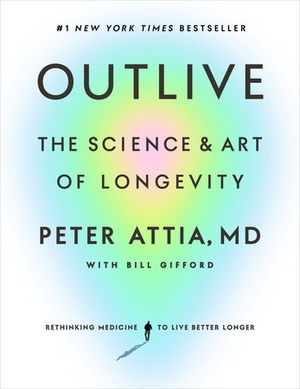
"Outlive" is Peter Attia's magnum opus on longevity: a comprehensive guide to extending not just how long you live, but how well you live. Working with journalist Bill Gifford, Attia presents a framework he calls "Medicine 3.0," which shifts from treating disease to preventing it altogether.
The book is structured around a critical distinction: lifespan is simply the number of years you're alive, but healthspan is the number of years you actually feel alive: the ones where you have the physical and mental capacity to do what matters most to you. Attia makes a compelling case that optimizing for healthspan first makes lifespan extension almost inevitable.
The core argument centers on the "Four Horsemen": the four chronic diseases that kill most people (heart disease, cancer, neurodegenerative disease, and type 2 diabetes). Attia argues that these aren't inevitable afflictions of aging but rather preventable outcomes of how we live. He then builds his framework around four pillars: exercise, nutrition, sleep, and emotional health. Each pillar gets deep, nuanced treatment grounded in the latest science but explained in ways that don't require a PhD to understand.
Throughout, Attia weaves together cutting-edge research, anecdotes from his own patients, personal experiments, and hard-won wisdom from his decades in medicine. You'll find detailed discussions of VO2 max, metabolic syndrome, strength training protocols, circadian rhythms, stress management, and the surprising neuroscience of emotional wellbeing.
Who should read this
"Outlive" is for anyone who's ever wondered: "Okay, but what do I actually do to live longer?" It's perfect for people in their 40s, 50s, and beyond who recognize that aging happens, but aren't ready to accept preventable decline. You don't need to be a fitness enthusiast or a health nut, just someone genuinely curious about extending your functional years.
It's also valuable for younger readers (30s-40s) who want to understand the science of what they're building now and why the habits you form today echo decades forward. Attia's perspective on prevention reframes health not as vanity but as rationality.
That said, this isn't a quick-fix book. It's for readers willing to engage with nuance, handle some scientific complexity, and think about their health holistically. If you want a 50-page summary, you'll find it frustrating. If you want to understand why certain choices matter, you'll find it invaluable.
Strengths and weaknesses
The strengths are substantial. Attia and Gifford have created something genuinely impressive: a book that's both rigorously scientific and deeply human. The research is current and well-cited, but it never devolves into jargon soup. The personal stories (Attia's own health crises, his patients' transformations, his learning from mentors) make the science feel earned rather than delivered from on high. The four-pillar framework provides real structure to what could've been an overwhelming heap of health information. And perhaps most importantly, Attia acknowledges uncertainty. He doesn't pretend everything is settled science; he explains the evidence, the debates, and where the field is still evolving.
The book's treatment of emotional health deserves special mention. In a landscape of longevity books focused narrowly on exercise and diet, Attia gives emotional wellbeing equal weight. He explores how chronic stress literally ages your cells, how relationships affect mortality risk as much as smoking does, and how anxiety and depression are health issues that deserve the same rigor we apply to lipid profiles. This holistic view, recognizing that mental and physical health are inseparable, is increasingly validated by neuroscience and should be standard in health literature.
The weaknesses are real but manageable. The book is long: sometimes gratuitously so. There are passages where Attia could've said something in five pages in fifteen. Some sections are genuinely technical; readers without science backgrounds may hit chapters on metabolic dysfunction or genetics and feel their eyes glaze over. The book also assumes you have time, access, and sometimes money to implement its suggestions. Not everyone can hire a personal trainer, spend two hours a week strength training, or afford premium sleep technology.
There's also a subtle bias toward quantification: lots of talk about VO2 max scores, body composition percentages, and sleep metrics. For readers who find that exhausting or anxiety-inducing, the constant focus on measurement can feel reductive.
The mental health connection
Here's what makes "Outlive" relevant to mental health: Attia is crystal clear that the four pillars (exercise, nutrition, sleep, and emotional health) are four legs of one stool. You can't prioritize three and neglect one. His discussion of emotional health covers stress management, the neurobiology of anxiety, the health impact of loneliness, and the surprising connection between grief and immune function. He explores how chronic emotional strain weakens your cardiovascular system, disrupts sleep, and increases inflammation. Conversely, he shows how addressing emotional health directly improves physical markers and extends life quality. This integration, treating mental and physical health as branches of the same tree, is where modern longevity science intersects beautifully with mental health.
Final verdict
"Outlive" is the kind of book that changes how you think. Not in a cultish way, but in a quieter, more persistent way. You finish it and suddenly you're genuinely curious about your own VO2 max. You start thinking about your sleep not as downtime but as essential maintenance. You recognize how emotional health is actually health. You feel less like aging is something that happens to you and more like something you have agency in.
Is it perfect? No. Is it occasionally long-winded? Sure. But it's also one of the most thoughtful, rigorous, and humane explorations of longevity available today. Attia doesn't offer magical solutions or sell you shortcuts. He offers science, honesty, and a framework for thinking about health that treats you like an intelligent person capable of making informed decisions.
The consensus from critics and readers alike is overwhelmingly positive: Kirkus Reviews calls it "a data- and anecdote-rich invitation to live better, and perhaps a little longer, by making scientifically smart choices." Publishers Weekly notes that Attia "strikes the delicate balance between providing scientific background and keeping his explanations accessible." Goodreads readers average 4.33 out of 5 stars, with many describing it as genuinely life-changing.
Whether you're 35 trying to build good habits now, 55 realizing you've coasted on luck, or 70 and ready to optimize your remaining decades, there's something here for you. "Outlive" respects your time and your intelligence. It's the opposite of the oversimplified health content that floods the internet. Read it slowly, take notes, and expect to return to it. It's a book that compounds in value: each time you revisit it, you'll catch something new.