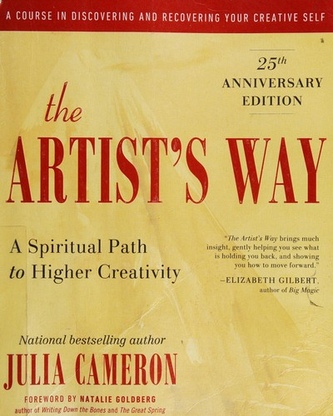
Some books you read. The Artist's Way is one you do. First published in 1992 and still selling steadily three decades and more than four million copies later, Julia Cameron's slim guide has quietly become a cultural touchstone - the book friends press into your hands when you tell them you feel stuck, flat, or like the spark you used to have has gone missing. It is marketed as a recovery program for blocked creatives, but in practice it has become something broader: a 12-week course in paying attention to your own inner life, with a daily journaling habit at its centre that has outgrown the book entirely.
What the book covers
The structure is simple and surprisingly disciplined. Over twelve chapters, each meant to be worked through one week at a time, Cameron walks you through what she calls creative recovery - the slow process of clearing away the fear, resentment, and self-criticism that keep people from making things. Each week pairs a short, readable essay with a set of tasks and reflection prompts, and the whole thing is held together by two non-negotiable practices.
The first, and the reason most people know this book, is Morning Pages: three pages of longhand, stream-of-consciousness writing done first thing every morning, before the day's defenses go up. There is no right way to do them and nobody ever reads them, including, ideally, you. The second is the Artist Date - a weekly solo outing to do something playful and nourishing, no productivity required. Around these two anchors, Cameron layers exercises on identifying old wounds, naming the people who discouraged you, and rebuilding a sense of permission to create. It is less a book about technique than a book about removing the things that block technique from ever showing up.
Who should read this
This is a book for anyone who feels creatively or emotionally stuck and wants a structured way out rather than vague encouragement. You do not need to be a painter or a novelist; the readers who get the most from it are often people who would never call themselves artists at all - people processing a career change, a loss, a long stretch of feeling numb, or simply the sense that they have stopped noticing their own life. If you respond well to routine and the gentle accountability of a weekly plan, you will find a lot of scaffolding here.
It is a harder sell if you want quick, practical craft advice, or if you bristle at spiritual language. Cameron asks you to commit real time every single day for three months, and the payoff is cumulative rather than instant. Skimmers and cynics tend to bounce off it. Doers tend to be quietly amazed.
Strengths and weaknesses
The great strength of The Artist's Way is that its central tool actually works, and works for almost everyone who sticks with it. Morning Pages are deceptively powerful: the simple act of emptying your head onto paper before the day starts has a way of surfacing what is really bothering you, dissolving low-grade anxiety, and turning down the volume on the inner critic who insists everything you make is worthless. Cameron's tone helps enormously here - she is warm, a little wry, and endlessly permission-giving, which is exactly what a discouraged reader needs. The week-by-week structure gives shape to what could easily be an overwhelming process, and the sheer longevity of the book is its own kind of evidence; very few self-help titles are still actively changing lives more than thirty years on.
The weaknesses are real and worth being honest about, because they are the reason this lands at a strong four rather than a perfect five. The book is steeped in spiritual, sometimes quasi-religious language - talk of God, the Great Creator, and the universe conspiring to support your art. Cameron is careful to say you can substitute your own word for any higher power, and plenty of secular readers do exactly that and get on fine. But for some the framing tips into woo, and critics have fairly noted that the program borrows heavily from the language and ritual of twelve-step recovery, which not everyone wants in their creative life. It is also, by design, long on spirit and short on craft: if you are hoping to learn how to actually write a better sentence or compose a better image, this is not that book. Read it for the inner work, not the technical instruction, and the spiritual packaging becomes far easier to take or leave.
Why this matters for mental health
Strip away the talk of muses and you are left with something that looks a lot like a clinically sensible practice. Morning Pages are, in effect, daily expressive journaling - and the act of writing freely about whatever is on your mind is one of the most accessible tools we have for managing anxiety, working through difficult emotions, and getting distance from the harsh inner critic that drives so much rumination and self-doubt. Many readers come to The Artist's Way for their creativity and stay for the emotional clarity, using the pages as a private space to process stress, notice patterns in their moods, and reconnect with what they actually want. It is not therapy, and Cameron never claims it is, but as a low-cost, self-directed habit for tending your mental wellbeing, it has quietly helped an enormous number of people feel more like themselves.
Final verdict
The Artist's Way has earned its reputation. It is not flawless - the spiritual register will not suit everyone, and you will have to look elsewhere for craft - but the heart of it, that daily ritual of putting pen to paper and getting honest, is as effective now as it was in 1992. If you are feeling blocked, foggy, or quietly disconnected from yourself, this is one of the safest recommendations in the whole self-development shelf, precisely because it asks you to do so little each day and gives back so much. Buy a copy, find a notebook you like, and start tomorrow morning before you can talk yourself out of it. Leap, as Cameron says, and the net will appear.