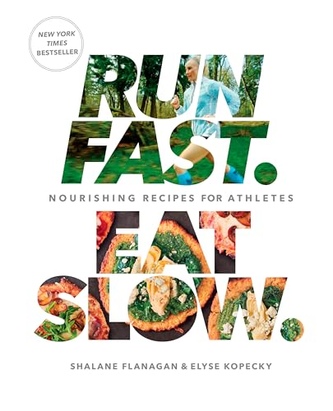
What the Book Covers
"Run Fast. Eat Slow." is a celebration of real food, built on a simple premise: athletes deserve to eat meals that taste incredible and fuel their bodies properly. Shalane Flanagan, a four-time Olympian and New York City Marathon champion, teamed up with chef Elyse Kopecky to create a cookbook that breaks the rigid rules most athletes live by. Over 256 pages, you'll find more than 100 recipes organized by mealtime: from overnight oats and egg scrambles through grain bowls, pizza, and race-day fuel. But recipes are just the entry point. The book pairs those recipes with a philosophy that rejects the calorie-counting, macro-obsessing mentality that has eaten away at athletic culture, especially for women. The authors argue, convincingly, that restrictive dieting doesn't make better athletes; nourishing, whole food does.
What makes this book different is that it doesn't preach "light and lean." Instead, Flanagan and Kopecky argue that fat is essential for flavor and performance, that your body needs real food with real ingredients, and that joy in eating is part of the fuel equation. The book includes inspiring stories about how the two women became friends across different worlds (Olympic running and professional cooking), plus accessible nutritional wisdom woven throughout without being preachy. They tackle the elephant in the room: how much nutritional garbage athletes, particularly female athletes: are told to consume in pursuit of some mythical "ideal" body. This is countercultural stuff in the fitness world, and it lands hard.
Who Should Read This
This book is obvious for serious athletes: runners especially, given Flanagan's credentials, but it's equally valuable for anyone tired of the calories-in-calories-out mentality. If you cook for yourself and care about eating well without obsessing over numbers, this is for you. Parents of young athletes will find accessible family meals here. Anyone recovering from disordered eating or diet fatigue will appreciate the philosophy's kindness and practicality.
That said, if you're following a strict macro-counting protocol for a specific training phase, or if you have extensive dietary restrictions (the book has limited vegan and allergy-friendly options), you might find yourself adapting more than you'd like. But the foundational approach, real food first, works across almost any eating style.
Strengths and Weaknesses
Strengths: The recipes are genuinely good. This isn't tofu-based "healthy" food that tastes like discipline; these recipes are indulgent and delicious by normal food standards. The mixture of quick weeknight meals (grain bowls, roasted veggie plates) and more elaborate dishes means you're not choosing between convenience and quality. You get everything from Flanagan's signature Superhero muffins to race-day bars, energizing smoothies, and homemade pizza: dishes that feel celebratory rather than obligatory. The philosophy is the real gift here. In a world that sends athletes constant messages about restriction, this book says: eat real food, enjoy it, and trust your body. For athletes, particularly female athletes: who've internalized diet culture, that's quietly radical.
The layout is functional and beautiful. The intro sections on nutrition, meal prep, and the authors' approach are worth reading. And the fact that both authors are athletes means the recipes have been tested under actual training conditions, not just in a test kitchen. You're getting wisdom earned through decades of real athletic experience, not theory.
Weaknesses: The writing style is uneven. Some readers love the conversational tone; others feel it undermines the nutritional credibility. The book intentionally excludes calorie and macro counts, which is philosophically sound but practically limiting if you're training for something specific and need that data. A few recipes feel more elaborate than a hungry athlete might want on a Tuesday night, not every recipe delivers the "quick fuel" promise. And for readers with specific allergies or strict vegan protocols, the options feel limited. One Goodreads reviewer summed up a valid critique: strong recipes, but the additional content beyond recipes is hit-or-miss. This isn't a dealbreaker, but it's worth knowing before you buy.
Nutrition and Mental Health Connection
Here's the thread that connects athletic nutrition to mental health: proper fueling isn't just about physical performance: it's about how your brain functions. When you feed yourself with whole foods and stop the restrict-binge-guilt cycle, your mood stabilizes, anxiety drops, and your relationship with food becomes grounded in nourishment rather than fear. Athletes who eat this way report better focus, less fatigue-related depression, and more confidence. The book's rejection of calorie-counting isn't just philosophy; it's also mental health care.
Final Verdict
"Run Fast. Eat Slow." is a genuinely useful cookbook that happens to carry a bigger message: your worth isn't determined by your weight, and your body knows how to perform when you feed it real food. The recipes deliver, the philosophy is sound, and the book respects both your intelligence and your appetite. It's not perfect: some readers will want more data, others will find the tone too casual, but as a foundational text for athletic nutrition and a love letter to cooking and eating well, it's hard to beat.
What lingers most is the permission slip the book gives you. Permission to eat butter. Permission to skip the kale if it doesn't appeal to you today. Permission to nourish yourself without guilt or calculation. In a culture obsessed with optimizing every calorie, that's genuinely subversive. And the best part? The food is actually good enough to make you want to stay in the kitchen without it feeling like punishment.
Score it a 4 out of 5. The recipes and philosophy earn the high marks; the occasional unevenness in tone and content keeps it from perfection. But it's the kind of book that changes how you think about feeding yourself and the people you care about.
If you're an athlete tired of restriction, recovering from diet fatigue, or just someone who wants to cook food that nourishes without judgment, this book belongs on your kitchen shelf.