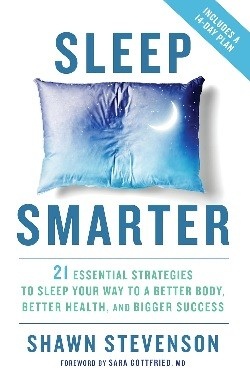
Sleep Smarter: A Mind Wobble Review
If you're lying awake at 2 AM wondering why you can't sleep despite being exhausted, or waking up feeling like you've been hit by a truck after eight hours in bed, Shawn Stevenson's Sleep Smarter might be the conversation you need to have with yourself.
This book is not another caffeine-culture manifesto romanticizing hustle and sleeplessness. Instead, Stevenson makes a boldly simple argument: sleep is not a luxury: it's a non-negotiable pillar of health, performance, and longevity. And the good news? You probably don't need expensive gadgets or prescription pills to sleep better. You need to understand how your body actually works.
What the Book Covers
Sleep Smarter breaks sleep optimization into 21 digestible strategies organized around four major themes: understanding sleep's value, creating the right physical environment, supporting your sleep biology through nutrition and movement, and managing stress and mental patterns.
Stevenson walks you through the science of the circadian rhythm: your body's internal clock, and explains why sunlight exposure at 6:30 AM matters more than you'd think. He explores how room temperature, light from screens, the food you eat, and even how you exercise influence your sleep quality. There's a practical 14-day sleep makeover that helps you implement these strategies progressively rather than overhauling your entire life at once.
The writing is conversational and often funny. Stevenson doesn't talk down to you, and he doesn't pretend sleep science is simple when it's not. Each chapter is short enough to read before bed without feeling like homework, but substantive enough to teach you something new.
Who Should Read This
If any of these descriptions fit you, this book is worth your time:
- You sleep six or fewer hours regularly and wonder if it's catching up with you (spoiler: it is).
- Your sleep quality feels inconsistent: sometimes great, sometimes terrible, with no clear pattern.
- You've heard sleep matters but don't understand the mechanics or why your current habits might be undermining rest.
- You want to optimize health but haven't focused on sleep as a lever yet.
- You're skeptical of one-size-fits-all wellness advice and want evidence-based guidance.
This is not the book for people with diagnosed sleep disorders like sleep apnea, narcolepsy, or severe insomnia: those require medical intervention. But for otherwise healthy people whose sleep quality has slipped, this is a smart starting point.
Strengths and Weaknesses
What works: The strategies are simple, low-cost, and implementable immediately. You don't need a new mattress, a sleep app, or supplements. You need to understand light exposure, room temperature, exercise timing, and stress management. Stevenson's research is extensive; he cites hundreds of studies and provides a full reference section. The practical orientation means you can pick this up and start making changes today.
The 14-day framework is clever. Rather than demanding perfection, it lets you build momentum gradually. Many readers report measurable improvements on sleep-tracking devices after implementing these strategies consistently.
Where it stumbles: Not all of Stevenson's citations are created equal. Some reference newer, unreplicated research. A few claims are overstated without sufficient acknowledgment of contrary evidence. The book occasionally adopts a skeptical-of-doctors tone that, while understandable as a corrective to overmedicalization, oversimplifies the role medicine plays in sleep health.
There's also some repetition: core messages get reinforced multiple times, which helps retention but can feel padded.
Final Verdict
Sleep Smarter is warm, practical, and genuinely useful. It's not a rigorous scientific monograph, but it's far more grounded than typical wellness books. Stevenson takes sleep seriously without treating it as a mystical practice. The strategies work because they align with how your biology actually functions.
If you're ready to treat sleep like the performance asset it is, not a luxury or a waste of time: this book will give you a clear roadmap. You won't agree with every detail, and you may want to verify some claims with additional sources. But you'll almost certainly walk away with actionable ideas that improve how you rest, and better rest changes everything else.
The Goodreads rating of 3.98 feels about right: consistently helpful for most readers, but not universally transformative. It's the kind of book that works best when you actually implement the suggestions, not just read about them.
Recommendation: Pick this up if sleep quality matters to you and you want evidence-based strategies over hype. You'll get practical value within the first few chapters.