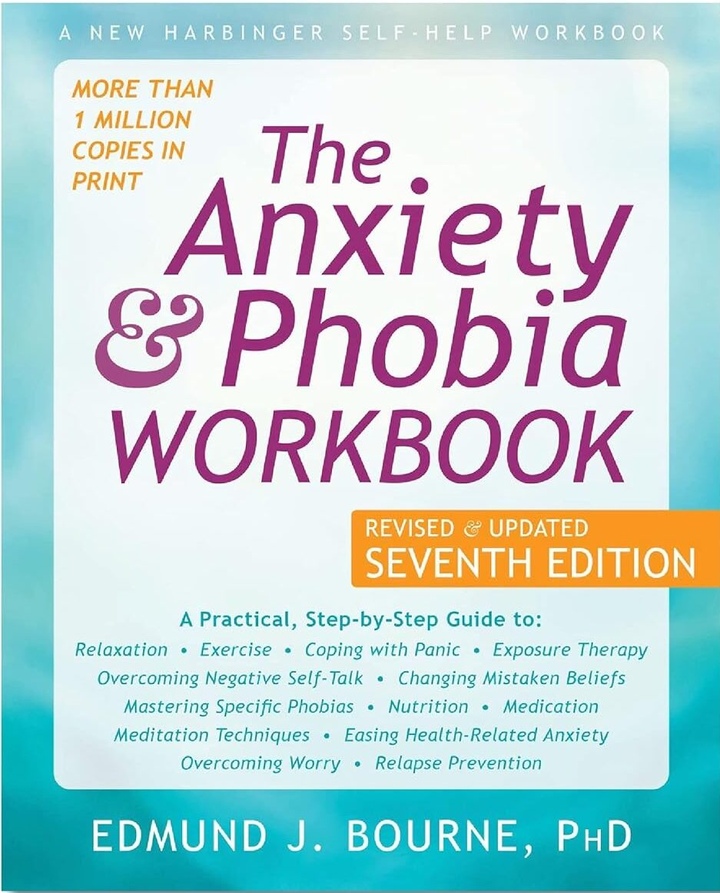
What the book covers
Edmund Bourne's The Anxiety and Phobia Workbook is the gold standard in self-directed anxiety treatment. Across 528 pages, this fully revised 7th edition (2020) systematically addresses panic disorder, agoraphobia, generalized anxiety disorder (GAD), social anxiety, specific phobias, obsessive-compulsive disorder (OCD), post-traumatic stress disorder (PTSD), and chronic worry. The book has already helped over one million readers achieve lasting recovery.
The workbook weaves together cognitive-behavioral therapy (CBT) principles, the most clinically validated approach for anxiety, with practical, reproducible techniques. You'll find chapters on progressive muscle relaxation, controlled breathing, cognitive restructuring (challenging anxious thoughts), imaginal and in-vivo exposure, dietary and lifestyle modifications, exercise, sleep optimization, mindfulness meditation, and medication management. The 7th edition adds contemporary content on neurobiology, relapse prevention, cannabis, ketamine, and emerging therapies.
What sets this apart from generic self-help is its structure. Rather than preach, Bourne hands you worksheets, timelines, and step-by-step protocols to implement immediately. This is a book you do, not one you passively consume. You'll assess your anxiety baseline, identify triggers, learn to recognize physical and cognitive patterns, and progress through graded exposure exercises at your own pace.
Who should read this
This workbook is designed for anyone struggling with anxiety: whether diagnosed or self-recognized. If you experience panic attacks, social anxiety, performance anxiety, health anxiety, intrusive thoughts, or pervasive worry, this is your starting point. Therapists worldwide recommend it as a standalone treatment for mild-to-moderate anxiety or as a powerful supplement to therapy. Readers report that even small sections yield measurable relief.
The book also suits therapists, counselors, and mental health professionals. Many keep a copy on their shelf to reference while treating anxious clients, and some use it directly with patients as a structured homework framework.
However, it's not ideal if you're seeking a quick read or a philosophical understanding of anxiety without the effort of self-directed practice. And while the workbook excels for generalized anxiety, those with severe phobias may need professional exposure therapy in addition to or instead of solo self-work.
Strengths and weaknesses
Strengths:
The book's greatest strength is its breadth and clinical rigor. Bourne, a leading anxiety disorder specialist, has distilled three decades of evidence into a single, accessible volume. Unlike trendy anxiety apps or vague positivity, this workbook is grounded in neuroscience and randomized controlled trials. CBT genuinely works for anxiety: meta-analyses confirm it, and Bourne presents the techniques clearly enough that you can apply them at home.
The holistic framework is another win. Most anxiety workbooks focus on breathing or thought-challenging alone. Bourne recognizes that anxiety lives in your body, mind, and lifestyle. He addresses sleep, nutrition, exercise, meditation, and medication alongside behavioral techniques. This multi-angle approach increases the odds of success.
The 7th edition updates matter. Neurobiology, trauma, relapse prevention, and newer pharmacological options are now included. The book stays current without losing its timeless core wisdom.
Lastly, the worksheets and assessments are genuinely useful. Pre- and post-treatment logs let you track progress objectively. Exposure hierarchies and thought records feel like working with a therapist who's sitting beside you.
Weaknesses:
The book can feel overwhelming. At 528 pages of dense, information-packed content, some readers report starting with enthusiasm and then abandoning it halfway through. The workbook demands self-discipline; there's no therapist pushing you forward.
It's less effective for specific phobias. While the progressive exposure principles work, severe animal phobias or driving phobias often need the real-time guidance and behavioral management of a trained professional. Solo workbook exposure can backfire if anxiety spikes without support.
Some users note insufficient case examples and narratives. Bourne prioritizes practical structure over storytelling, which suits hands-on learners but leaves narrative-oriented readers wanting more context and relatability.
Finally, individual differences matter. Someone with deep trauma or severe panic may need medication and therapy before a workbook alone can help. This is a tool, not a replacement for clinical care in complex cases.
Final verdict
The Anxiety and Phobia Workbook is essential reading for anyone with anxiety. It's not a trendy fix or wellness theater: it's evidence-based, thorough, and proven across three decades and over one million readers. The 7th edition reflects current neuroscience while maintaining the practical simplicity that made earlier editions bestsellers.
Use it as your primary treatment if anxiety is mild-to-moderate and you're motivated to engage with the exercises. Use it alongside therapy if anxiety is complex or severe. Use it as a therapist to deepen your practice. In nearly all cases, you'll find value in Bourne's clear, compassionate, scientifically grounded approach.
If you're ready to understand anxiety at its roots: physical, cognitive, behavioral, and willing to do the work to dismantle it, this is your book. It won't be quick, and it will demand effort, but the recovery on the other side is real. Mind Wobble recommends it wholeheartedly.
Reading time: 8-12 weeks of active engagement (working through sections)
Best format: Print (for worksheets and highlighting)
Paired with: Therapy, mindfulness apps, or lifestyle changes for maximum effect