What the book covers
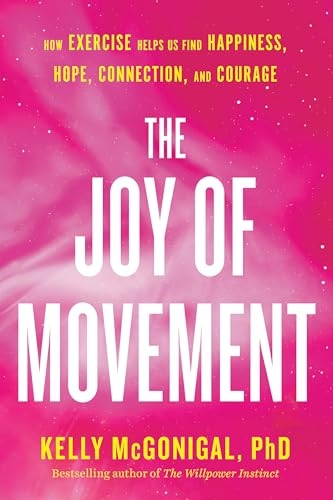
Kelly McGonigal's "The Joy of Movement" flips the script on how most of us think about exercise. Instead of the usual "you should work out to look better or avoid disease" message, McGonigal asks a more fundamental question: What if we've been thinking about movement all wrong?
The book weaves together neuroscience, psychology, anthropology, and evolutionary biology to show that movement isn't a chore we drag ourselves through for health insurance points. It's one of the most basic human joys we've somehow managed to forget.
McGonigal takes us on a global journey: from Tanzania's Hadza people, whose entire culture is built around movement for survival and joy, to dance therapy classes at Juilliard for people with Parkinson's disease, to London runners finding community in the predawn darkness. Each story is grounded in research: about dopamine and reward, about how our brains evolved for movement, about what happens when we move together.
The core argument is this: movement gives us pleasure, identity, belonging, and hope. It's where we experience mastery, connect with others, and express who we are. When we move intentionally and joyfully, we're not just exercising: we're tapping into something deeply, evolutionarily human.
Who should read this
This book is for anyone who has ever struggled with the gap between knowing they "should" exercise and actually loving it. If you're familiar with the guilt spiral (the New Year's resolutions, the gym memberships that go unused, the sense that exercise is something you do to compensate for living), this book speaks directly to you.
It's also valuable for fitness professionals, therapists, parents trying to raise kids who feel at home in their bodies, and anyone interested in the psychology of habit and motivation. McGonigal doesn't just diagnose the problem; she offers a complete reframe.
The book will resonate especially with people who have found joy in movement but struggle to explain why it matters so much. McGonigal gives you the language and the science to make sense of your love for running, dancing, swimming, or walking.
Strengths and weaknesses
McGonigal's greatest strength is her warmth and accessibility. You don't feel lectured; you feel like you're having a conversation with someone who genuinely cares about your relationship with your body. Her research is solid and current: drawing from neuroscience labs and evolutionary psychology, but it never feels academic. She lets the stories and the science breathe together.
The book is packed with global perspectives. Rather than centering exercise through a Western, individualistic lens, McGonigal explores how different cultures understand movement. This breadth is refreshing and genuinely illuminating.
The reframe itself is powerful. By arguing that exercise is primarily about joy rather than obligation, McGonigal gives readers permission to think differently. That shift alone has value.
That said, the narrative structure can feel loose. Some readers will love the story-rich approach; others will find it meandering. The book doesn't offer a strict roadmap to "how to fall in love with movement": instead, it trusts that understanding why movement matters will naturally shift your behavior. That works for some people and frustrates others.
The practical content is lighter than you might expect from a self-help book. If you're looking for a 12-week plan or specific strategies for motivation, this isn't it. McGonigal is after something bigger: a philosophical shift in how you see your body and movement.
Final verdict
"The Joy of Movement" succeeds brilliantly at what it sets out to do: make the case that exercise is fundamentally about joy, not punishment. For anyone burned out on the guilt-driven fitness culture, this book is a breath of fresh air.
The writing is warm and intelligent. The science is real without being overwhelming. The stories stick with you. Whether you're a dancer, a runner, a walker, or someone who's been avoiding movement entirely, there's something here that will speak to you.
It's not a complete fitness manual, and it doesn't pretend to be. But as a philosophical and scientific case for why humans need and crave movement, it's genuinely excellent. It will change how you think about your body, probably for the better.
If you've been waiting for permission to stop hating exercise and start loving movement, this is the book that gives it to you.