What the Book Covers
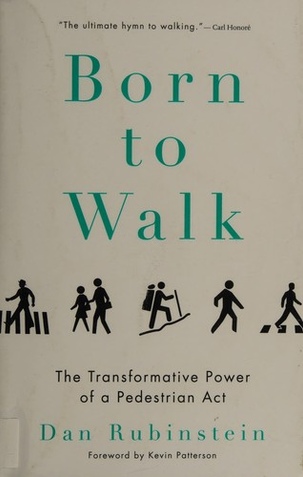
Dan Rubinstein's Born to Walk is a wide-ranging investigation into why we walk, why we've stopped, and what we're missing by trading pedestrian life for speed. Written by a writer and editor who found himself at a personal crossroads, the book documents Rubinstein's travels throughout the U.S., U.K., and Canada, where he walked with people who understood walking as something far more profound than mere transportation.
The book is structured thematically, with chapters devoted to how walking affects our Body, Mind, Society, Economy, Politics, Creativity, Spirit, and Family. Each chapter is anchored in rigorous research: peer-reviewed studies, journalistic investigation, and compelling personal anecdotes that make the science feel lived, not theoretical.
What makes Born to Walk especially relevant for Mind Wobble readers is its treatment of walking as a therapeutic practice. In the "Mind" chapter, Rubinstein examines walking programs designed to counter depression and anxiety, explores the documented benefits of nature walks on war veterans with PTSD, and investigates how neighborhood walking initiatives connect people to place and one another. The research is plentiful: studies showing walking's effect on neurotransmitters, cortisol reduction, and mood stabilization. But Rubinstein never lets the data overwhelm the human element: he grounds everything in stories of real people whose lives shifted through consistent walking.
The book also explores walking as a doorway to creativity. Artists, writers, and thinkers have long credited walking with unlocking ideas. Rubinstein interviews modern creative professionals and examines what happens neurologically when we walk: how the rhythm and movement free the mind to engage in associative thinking that desk work can't provide.
Who Should Read This
Born to Walk is essential reading for:
- Anyone struggling with anxiety or depression who's looking for practical, evidence-backed alternatives or complements to traditional treatment.
- Creative professionals seeking to reclaim walking as a thinking tool.
- People interested in urban design and mental health from a systems perspective.
- Walkers and hikers who want deeper understanding of why their practice matters.
- Those questioning modern speed culture and looking for philosophical permission to slow down.
If you've felt the mental clarity that comes after a walk but struggled to articulate why, Rubinstein gives you the language and the science. If you're skeptical about wellness trends, his meticulous research will convince you that walking isn't a trend: it's a forgotten foundation.
Strengths and Weaknesses
Strengths:
The book's greatest asset is its intellectual honesty. Rubinstein doesn't oversell walking as a cure-all. He's careful to distinguish between what the research clearly shows and what remains open to interpretation. His interviews are genuinely curious, not confirmatory: he talks to urban planners who worry about gentrification, cardiologists who study walking benefits, and everyday people for whom walking is spiritual practice.
The writing is engaging throughout. Rubinstein has a journalist's eye for narrative; even chapter-long explorations of economic data about pedestrian-friendly city planning feel propulsive. The personal thread. Rubinstein's own journey out of professional crisis through walking: provides emotional anchoring without becoming self-indulgent.
The breadth is remarkable. Most books about walking focus on fitness or philosophy or psychology. Rubinstein weaves them together. He's equally comfortable discussing the neuroscience of walking's effect on depression as he is examining the economics of street-level retail in pedestrian-friendly neighborhoods. This holistic approach feels genuinely novel.
Weaknesses:
The book's density is both strength and liability. Some chapters, particularly those on economics and policy: shift into a more academic register that may feel heavy if you're reading for inspiration or practical guidance rather than comprehensive understanding.
The geographical focus is primarily Canadian and American, with some European examples. Readers outside North America may find the policy discussions less applicable, and the cultural context of car-dependent sprawl is very specific to certain regions.
The book is stronger on why walking matters than on how to start or sustain a walking practice. While Rubinstein's personal narrative models walking as medicine, the book lacks explicit guidance for someone dealing with depression or anxiety who might not know where to begin.
Final Verdict
Born to Walk deserves a place on your shelf: whether you're a devoted walker or someone who's been meaning to get moving. It's research journalism at its finest: rigorous, readable, and genuinely persuasive. Rubinstein doesn't ask you to take walking on faith. He shows you the peer-reviewed evidence, introduces you to people for whom walking transformed everything, and makes a case that feels both intellectually sound and spiritually true.
For anyone interested in the intersection of physical movement and mental wellbeing, this book is essential reading. It validates what your body has been trying to tell you: walking is medicine, walking is thinking, walking is community, and walking, in our accelerated age, is an act of quiet rebellion.
Score: 4.5/5
Walking away from this book, you'll understand that the most transformative journeys often begin with a single step.