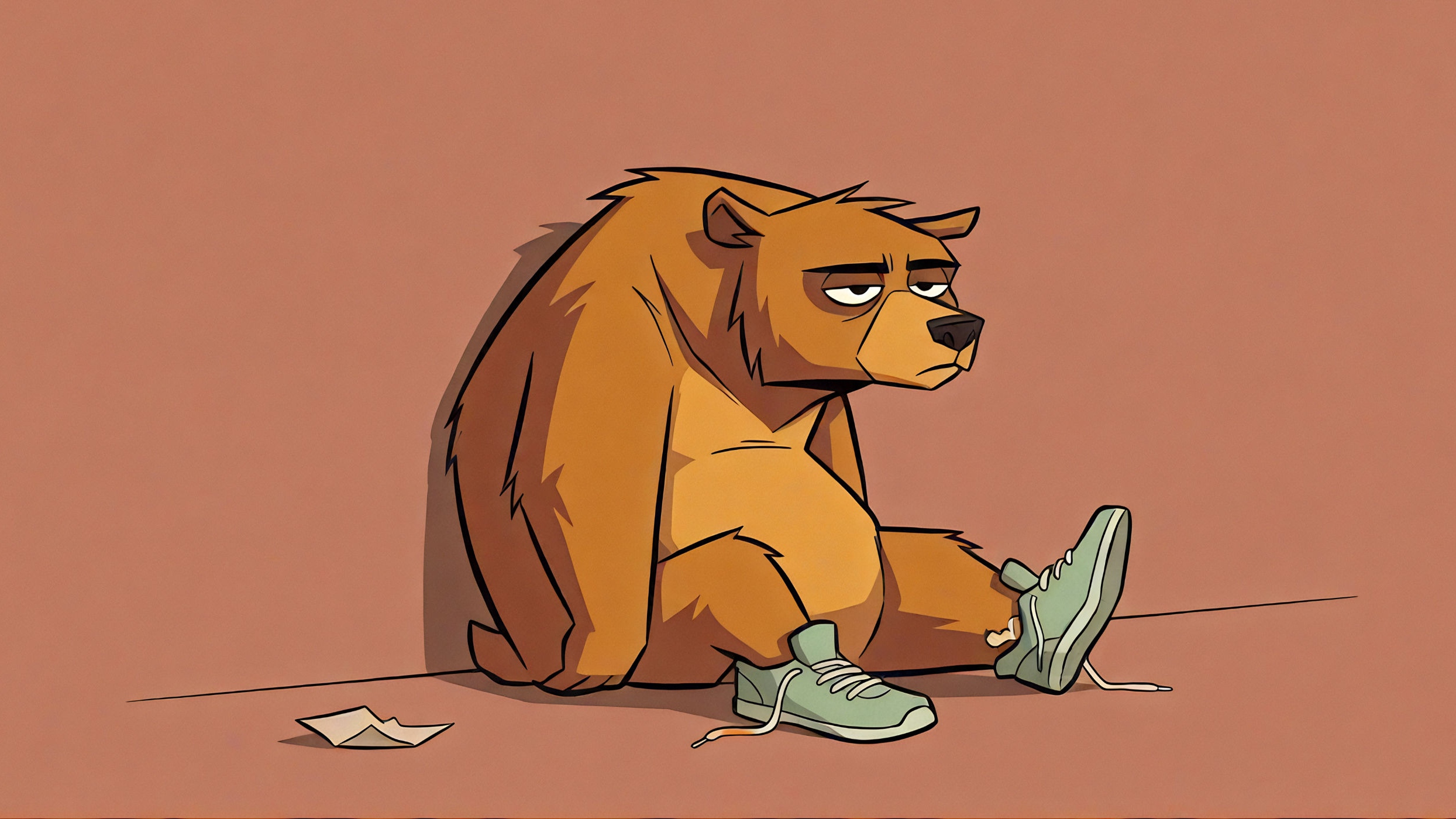
You know the feeling. Your chest is tight, your thoughts are looping, and someone (probably well-meaning) has told you to "just go for a run." As if lacing up your trainers is the emotional equivalent of hitting a reset button. And here's the thing: they're not entirely wrong. Exercise genuinely is one of the most effective tools we have for managing anxiety. But the full picture is more complicated than "move more, worry less." Because sometimes, for some people, certain types of exercise don't calm anxiety down. They crank it up.
Understanding why exercise helps, and when it doesn't, is the difference between finding genuine relief and adding another source of stress to an already overloaded system.
What Anxiety Actually Does to Your Body
Before we talk about movement, it helps to understand what's happening inside you when anxiety takes hold. Because anxiety isn't just a feeling. It's a full-body event.
When your brain perceives a threat (real or imagined), your sympathetic nervous system fires up. Heart rate climbs. Breathing quickens. Muscles tense. Digestion slows. Cortisol and adrenaline flood your system. This is your fight-or-flight response, and it evolved to save your life in genuinely dangerous situations.
The problem is that your autonomic nervous system doesn't distinguish between a bear in the woods and an overflowing inbox. If you live with anxiety, your body is often running this stress response on a low (or not so low) simmer, all day long. Think of it like a smoke alarm that's been wired too sensitively; it doesn't just go off when the house is on fire, it screams at you because someone's making toast.
This matters for exercise because when you're already in a state of physiological arousal, adding more physical stress to the mix can go one of two ways. It can help your body complete the stress cycle and calm down. Or, if the dose is wrong, it can tip you further into overdrive.
The Science Behind Why Movement Calms an Anxious Brain
So what's actually happening, biologically, when exercise eases anxiety? The popular explanation has always been endorphins. And while endorphins do play a role, the real story is much more interesting.
Your brain's own cannabis system
It turns out that the "runner's high" (that wave of calm and mild euphoria after sustained exercise) likely has less to do with endorphins than researchers once thought. A 2021 study published in Psychoneuroendocrinology found that when researchers blocked opioid receptors in participants before exercise, the euphoria and reduced anxiety still happened. What did change after exercise? Levels of endocannabinoids, particularly anandamide and 2-AG, which are the body's own versions of the active compounds in cannabis.
These molecules bind to the same receptors and produce similar effects: reduced anxiety, a sense of wellbeing, and a dampening of the threat-detection systems that drive anxious thoughts. A systematic review and meta-analysis confirmed that exercise reliably increases circulating endocannabinoid levels, and that these increases are linked to the mood-lifting and anxiety-reducing effects people report after working out.
BDNF: fertiliser for your brain
Exercise also triggers the release of brain-derived neurotrophic factor, or BDNF. Think of BDNF as fertiliser for your neurons. It promotes the growth of new brain cells, strengthens connections between existing ones, and supports the kind of neuroplasticity that helps your brain adapt and heal.
People with anxiety and depression tend to have lower baseline levels of BDNF. A single bout of exercise can measurably increase those levels, and regular exercise keeps them elevated. One study on patients with panic disorder found that acute exercise significantly improved BDNF levels that had been suppressed by the disorder. In other words, exercise doesn't just make you feel better in the moment; it physically changes the brain in ways that make it more resilient to anxiety over time.
The GABA connection
Then there's GABA, your brain's primary calming neurotransmitter. When GABA levels are low, your brain struggles to put the brakes on anxious thoughts and physical tension. A study from the Journal of Alternative and Complementary Medicine found that yoga, in particular, was associated with measurable increases in brain GABA levels compared to walking, suggesting that the type of movement matters when it comes to this specific mechanism.
Completing the Stress Cycle
Here's perhaps the most useful way to think about exercise and anxiety. Your body's stress response was designed to be temporary. It was meant to fire up, help you escape the danger, and then shut down once you were safe. The problem in modern life is that the "danger" rarely goes away. The email is still there. The bills are still unpaid. The uncertainty hasn't resolved.
Exercise gives your body the physical outlet it's been waiting for. When you move intensely enough, your body reads it as: "Right, we ran from the thing. We're safe now." Cortisol and adrenaline get metabolised. Your parasympathetic nervous system (the "rest and digest" branch) kicks back in. Heart rate drops. Muscles release. Breathing deepens.
This is what researchers call "completing the stress cycle," and it's one of the most powerful things exercise does for people with anxiety. Your body finally gets the memo: stand down, soldier. The battle's over.
Not All Exercise Is Created Equal (Especially If You're Anxious)
This is where the nuance lives. "Exercise" is a broad word that covers everything from a gentle walk in the park to a lung-burning HIIT session. And while the research overwhelmingly supports movement for anxiety, the type, intensity, and context all matter.
Gentle, rhythmic movement
Activities like walking, swimming, cycling at a steady pace, and yoga tend to be particularly effective for anxiety. They're rhythmic, predictable, and don't demand the kind of explosive effort that can feel threatening to an already activated nervous system.
Walking, in particular, punches well above its weight. A 2024 systematic review and meta-analysis of 75 randomised controlled trials found that walking significantly reduces both depressive and anxiety symptoms. And the dose doesn't need to be enormous: research published in The Lancet Regional Health found that physical activity equivalent to just 10 MET-hours per week (roughly a brisk daily walk) was associated with a 42% reduction in anxiety risk. If you're curious about building a walking practice, our guide to the daily walking habit covers the practical side.
Yoga and mind-body practices
Yoga deserves a special mention. A randomised clinical trial comparing yoga to cognitive behavioural therapy for generalised anxiety disorder found yoga to be a credible treatment option, though CBT remained superior in the long term. What makes yoga unique is its combination of movement, breathwork, and mindfulness, which appears to directly activate the parasympathetic nervous system and support vagal tone. If you're interested in getting started, we have a beginner's guide to yoga that breaks down what to expect.
A 2024 systematic review of mind-body exercises found significant anxiety reductions across multiple studies, with the breathing and meditation components appearing to be as important as the physical movement itself.
Resistance training
Here's one that surprises people. Lifting weights is genuinely good for anxiety. A meta-analysis of randomised controlled trials found that resistance exercise training produced a significant reduction in anxiety symptoms, and a 2024 review in young people found a large effect; larger, in fact, than many pharmaceutical interventions achieve for the same condition.
The mechanisms likely include a combination of increased self-efficacy (the confidence that comes from getting physically stronger), improved sleep quality, and the same neurochemical benefits (BDNF, endocannabinoids) that other forms of exercise provide. There's something psychologically grounding about picking up something heavy and putting it back down, over and over, while everything else feels uncertain.
HIIT and high-intensity training
Now, this is where it gets interesting. High-intensity interval training can be effective for anxiety, but the relationship is more complicated. A scoping review published in 2025 found that HIIT generally reduces anxiety, and some research even suggests it may reduce anxiety sensitivity (your fear of anxiety symptoms themselves) more than low-intensity alternatives.
But there's a catch.
When Exercise Makes Anxiety Worse
For most people, most of the time, exercise helps. But there's a meaningful subset of people for whom certain types of exercise, particularly high-intensity work, can actually increase anxiety. This isn't weakness or doing it wrong. It's physiology.
The interoceptive problem
Here's what happens. During intense exercise, your heart pounds. You gasp for breath. Your chest tightens. Sweat pours. Your muscles shake. For most people, these are simply the sensations of effort. But if you have anxiety (particularly panic disorder or high anxiety sensitivity), these sensations can feel indistinguishable from a panic attack.
This is what psychologists call an "interoceptive" response: your brain misinterprets normal exercise-induced body sensations as danger signals. Your heart is racing because you're doing burpees, but your anxious brain reads it as "something is very wrong." The result? Exercise triggers more anxiety, not less.
Research on anxiety sensitivity and interoceptive exposure shows that this fear of bodily sensations is a core feature of panic disorder and generalised anxiety. People with high anxiety sensitivity are, by definition, more likely to interpret physical arousal as threatening.
The cortisol question
There's also the cortisol angle. Exercise is, physiologically, a form of stress. It temporarily raises cortisol. For a well-rested, reasonably calm person, this is fine; cortisol rises, the workout ends, cortisol falls, and the body adapts. But if you're already running on chronically elevated cortisol (as many anxious people are), adding a brutal workout on top can keep you in that elevated state rather than helping you come down from it.
This doesn't mean all intense exercise is off the table. But it does mean that going from zero to a high-intensity CrossFit class when your nervous system is already maxed out might not be the best starting point.
When the gym becomes another source of pressure
There's a psychological dimension too. If exercise becomes another thing you "should" be doing, another item on the self-improvement checklist where you're measuring performance and judging yourself for falling short, it can feed the anxiety cycle rather than interrupt it. The pressure to exercise "enough" or "hard enough" can become its own source of stress, particularly for people who already struggle with perfectionism. If this resonates, you might recognise the pattern from high-functioning anxiety, where achievement becomes a coping mechanism rather than a source of genuine satisfaction.
Finding Your Threshold
So how do you know what's right for you? The honest answer is that it depends on where your nervous system is on any given day. But there are some useful guidelines.
Start lower than you think you need to
If you're in a period of high anxiety, begin with low-to-moderate intensity. A brisk walk, a gentle swim, a restorative yoga class, or a light resistance session. The goal isn't to exhaust yourself. It's to give your body enough movement to complete the stress cycle without tipping into further activation.
Use perceived exertion as your guide
On a scale of 1 to 10 (where 1 is sitting on the sofa and 10 is an all-out sprint), aim for a 5 or 6 on anxious days. You should be able to hold a conversation, though perhaps not a comfortable one. If you find yourself gasping, heart pounding, chest tight, and starting to feel panicky rather than energised, that's a signal to back off. Not forever. Just for today.
Pay attention to how you feel afterwards
The true test of whether exercise is helping your anxiety isn't how you feel during it (that can be uncomfortable regardless). It's how you feel 30 minutes to an hour after. If you feel calmer, clearer, and more grounded, the dose was right. If you feel wired, agitated, or more anxious than before, it was too much, and next time you can adjust.
Build gradually
Here's the fascinating part. That interoceptive fear response? It can actually be retrained. A 2025 randomised controlled trial found that using brief, intermittent intense exercise as a form of interoceptive exposure was more effective than relaxation training at reducing panic symptoms. The key is that it was done gradually, in a structured way, allowing participants to learn that a racing heart during exercise is safe, not dangerous. Over time, this reduced their sensitivity to those sensations outside of exercise too.
So if intense exercise currently triggers your anxiety, that doesn't mean it always will. It means you might need to work up to it, ideally with guidance, treating each small increase in intensity as an opportunity to teach your nervous system that these feelings are okay.
A Practical Cheat Sheet
Because sometimes you need something simple to refer to on a tough day:
When anxiety is high (7-10 out of 10):
- Walk outside for 15 to 20 minutes, ideally somewhere green
- Gentle yoga or stretching
- Slow, steady swimming
- Box breathing before and after
When anxiety is moderate (4-6 out of 10):
- Brisk walk or light jog
- Moderate resistance training
- A cycling session at a comfortable pace
- A yoga flow class
When anxiety is low (1-3 out of 10):
- This is your window for higher intensity if you enjoy it
- HIIT, running, group classes, heavy lifting
- Use this as an opportunity to gradually expand your comfort zone
Regardless of intensity:
- Exercise outdoors when possible (the combination of movement and nature has compounding benefits)
- Avoid exercising too close to bedtime if sleep anxiety is an issue
- Pair movement with something enjoyable: music, a podcast, a friend
- Remember that ten minutes counts. Research shows that even a single ten-minute walk can moderate the relationship between sedentary time and anxiety
When Exercise Isn't Enough
It would be irresponsible to write about exercise and anxiety without saying this clearly: exercise is a powerful tool, but it is not a cure-all and it is not a replacement for professional help.
If your anxiety is significantly affecting your daily life, your relationships, your ability to work, or your sleep; if you're experiencing panic attacks, obsessive thoughts, or persistent dread that doesn't shift regardless of what you do, please talk to a healthcare professional. Cognitive behavioural therapy, medication, and other evidence-based treatments exist for good reason, and using them alongside exercise is often the most effective approach.
Exercise works best as part of a broader toolkit, not as the entire toolkit.
The Bottom Line
The relationship between exercise and anxiety is genuinely one of the most encouraging areas of mental health research. The evidence is strong, consistent, and growing. Regular physical activity can reduce your risk of developing anxiety. It can ease symptoms if you already have it. And it does this through multiple pathways: endocannabinoids, BDNF, GABA, stress cycle completion, improved sleep, and increased confidence.
But the dose matters. The type matters. Your starting point matters. And the willingness to listen to your body, rather than override it with "no pain, no gain" bravado, might be the most important thing of all.
If you've been told to "just exercise" and found that it sometimes makes things worse, you're not broken. You just need a different entry point. Start gentle. Build slowly. Pay attention to how you feel afterwards. And give yourself permission to treat exercise not as punishment or obligation, but as one of the kindest things you can do for an anxious brain.
Frequently Asked Questions
What type of exercise is best for anxiety?
There's no single "best" type, but the research suggests that gentle, rhythmic activities like walking, swimming, and yoga tend to be particularly well-suited for people with anxiety. Resistance training also shows strong evidence. The best exercise for anxiety is ultimately the one you'll actually do consistently.
Can exercise replace medication for anxiety?
For mild to moderate anxiety, exercise can be a highly effective standalone intervention. For more severe anxiety disorders, exercise works best alongside other treatments such as therapy or medication. Always discuss changes to your treatment plan with a healthcare professional.
How much exercise do I need to reduce anxiety?
Research suggests benefits begin at surprisingly low doses. Even 10 minutes of walking can have a measurable effect. For more sustained benefits, evidence points to around 150 minutes of moderate activity per week (the standard public health recommendation), but any amount is better than none.
Why does exercise sometimes make my anxiety worse?
If you have high anxiety sensitivity, the physical sensations of intense exercise (racing heart, breathlessness, sweating) can mimic panic symptoms and trigger an anxiety response. This is a well-documented phenomenon. Starting with lower-intensity exercise and gradually building up can help retrain this response over time.
Should I exercise when I'm having a panic attack?
During an active panic attack, gentle grounding techniques and controlled breathing are usually more appropriate than exercise. Once the acute phase has passed, light movement like walking can help your body process the residual adrenaline. Avoid intense exercise during or immediately after a panic episode.