What the Book Covers
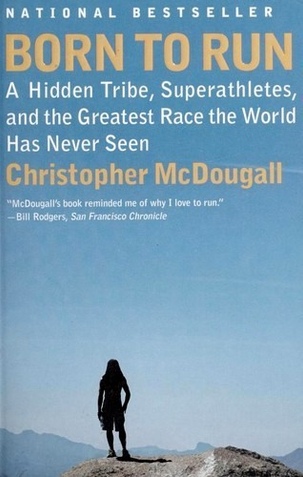
Born to Run is Christopher McDougall's masterpiece of narrative journalism wrapped around a simple question: Why do so many runners get injured? What started as a personal quest to understand his own recurring running injuries evolved into an international detective story spanning from running labs in Boulder, Colorado, to the remote Copper Canyons of Mexico, home to the legendary Tarahumara people.
McDougall weaves together multiple threads: the science of biomechanics and injury prevention, the story of an eccentric ultramarathoner named Caballo Blanco who befriends the Tarahumara, the author's own transformation from injured journalist to distance runner, and the historical evidence that humans are uniquely designed for endurance running. The narrative culminates in a breathtaking 50-mile race across a canyon, pitting ultra-running legends against the humble, humble Tarahumara runners who live their entire lives on the move.
The book's central thesis is revolutionary: modern running shoes, with their heavy cushioning and heel-strike design, may actually be causing the very injuries they promise to prevent. The Tarahumara, who run barefoot or in simple leather sandals across brutal terrain, remain injury-free. McDougall argues that we've forgotten how to run the way our bodies evolved to run, and rediscovering this natural form holds the key to becoming not just injury-free, but genuinely happy, connected, and alive.
Who Should Read This
Born to Run isn't just for runners. It's essential reading for anyone interested in human potential, biomechanics, sports science, or the intersection of ancient wisdom and modern athleticism. If you've ever wondered why running is harder or more painful than it seems like it should be, this book offers answers that challenge the entire athletic industry.
Non-runners will find themselves swept up in McDougall's storytelling. The narrative is propulsive: there's genuine mystery, danger, colorful characters, and the underlying question of whether an injured journalist can learn to run 50 miles without permanent damage. You don't need a runner's heart to care about the outcome.
If you're struggling with running injuries, this book is potentially life-changing. It explains the "why" behind pain you may have thought was inevitable. If you're interested in mental health and exercise, the connection McDougall draws between running and psychological resilience is profound.
Strengths and Weaknesses
The Strengths:
McDougall is a masterful storyteller. Born to Run reads less like a running book and more like an adventure narrative: equal parts mystery, character study, and scientific exploration. The prose is engaging, funny, and deeply human. He doesn't lecture about biomechanics; he shows you a runner's transformation.
The research is genuinely impressive. McDougall interviewed biomechanists, evolutionary anthropologists, distance-running legends, and spent considerable time with the Tarahumara themselves. He synthesizes disparate fields (evolutionary biology, sports science, anthropology, and philosophy) into a coherent argument about who we are and what our bodies are capable of.
The emotional core is authentic. This isn't a manifesto imposed from above; it's a personal journey. McDougall's vulnerability about his own injuries and fears makes the scientific conclusions feel earned, not preached.
The Weaknesses:
The book occasionally conflates anecdote with evidence. Just because the Tarahumara don't wear shoes and don't suffer injuries doesn't automatically mean minimal footwear is ideal for all runners in all contexts. Genetics, biomechanics, age, terrain, and training load are individual variables. The book tilts toward presenting the minimal-footwear philosophy as a universal truth when the reality is more nuanced.
Some of the biomechanical science has been challenged or refined since 2009. The book's framing of heel-strike running as inherently destructive has been contested by subsequent research. Different runners have different needs, and some do genuinely benefit from cushioning.
Finally, the book's argument about natural form and ancestral patterns can oversimplify complex physiology. Humans evolved to run, yes, but modern humans also have different genetics, training histories, body compositions, and tissue resilience than our ancestors.
Running and the Mind: A Deeper Connection
What makes Born to Run transcendent isn't just the running science: it's the profound connection McDougall draws between running and mental wellbeing. Running, in his telling, isn't merely exercise; it's a path to wholeness.
The runner's high is real and it's powerful. Endorphins and other neurochemicals flood the brain during sustained aerobic activity, creating a natural euphoria that can be as addictive as any substance: except it heals instead of harms. McDougall captures the meditative quality of distance running, where the repetitive motion quiets the anxious mind and creates space for clarity and presence.
For people struggling with depression and anxiety, running offers something therapy alone sometimes cannot: direct access to the body's own pharmacy. The act of moving forward, of pushing past perceived limitations, of discovering strength you didn't know you had: these experiences rewire the nervous system. Running becomes a form of applied optimism.
The tribal and communal aspects of running are equally healing. The Tarahumara don't run alone; they run together as part of their culture, their identity, their belonging to something larger than themselves. McDougall reminds us that humans are social creatures designed to move together. This sense of tribe and shared purpose is profoundly nourishing to the mental health: something especially urgent in our isolated, digital age. When you run with others, you're not just moving your body; you're reconnecting with the deepest human impulse toward community and connection.
Final Verdict
Born to Run is the kind of rare book that changes how you think about your body and what it's capable of. Whether you take every scientific claim as gospel truth or approach it with healthy skepticism, the impact is undeniable. Millions of people have read this book and transformed their relationship with running, their bodies, and their health.
Is it perfect? No. Is every claim equally supported by evidence? No. But is it important? Absolutely.
The book's real gift isn't that it has all the answers: it's that it asks the right questions and refuses to accept the conventional wisdom that running inevitably leads to injury. It reminds us that we are, at our deepest level, animals built for movement, for challenge, for covering distance. In reclaiming our capacity to run, we reclaim something essential about being human.
Whether you're a competitive marathoner, someone who has never run a mile, or an injured runner desperate for hope, Born to Run will move you: both literally and emotionally. It's a modern classic that belongs on the shelf of anyone interested in performance, health, and what it means to push the boundaries of human potential.
This is the running book that changed the sport forever. Read it.