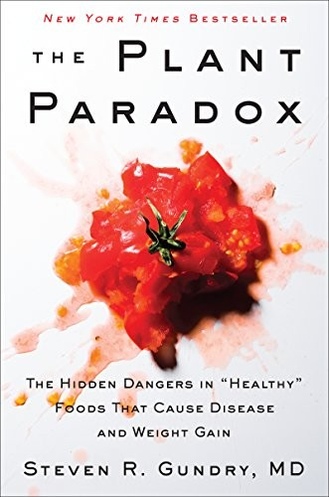
The Plant Paradox arrived in 2017 and quickly became one of the most commercially successful nutrition books of the decade. Steven Gundry, a former cardiac surgeon turned functional-medicine practitioner, argues that a class of plant proteins called lectins are a largely unrecognised driver of obesity, autoimmune disease, heart disease, and cognitive decline. The book has sold well over a million copies, spawned a cookbook, a quick-and-easy follow-up, and a substantial supplement business. It has also been firmly pushed back on by registered dietitians, academic nutrition researchers, and several of the major health publications that have reviewed it. A Mind Wobble review has to start with that tension.
What the book covers
Gundry's argument, stripped to its core, runs like this. Many plant foods contain lectins, a class of proteins that plants evolved as chemical defences against being eaten. Lectins, he says, damage the gut lining, trigger chronic low-grade inflammation, confuse the immune system, and sit behind a long list of modern chronic diseases. The foods highest in problem lectins, in his telling, include beans and legumes, whole grains, many nightshade vegetables (tomatoes, peppers, potatoes), conventional dairy, and most seeded fruits and vegetables in their seeded form. The Plant Paradox programme eliminates these for a strict phase and then permits limited, carefully prepared reintroduction - pressure-cooked beans, peeled and deseeded tomatoes, A2 dairy, and so on.
The book walks through the alleged mechanisms in some detail. It describes gut permeability, molecular mimicry, and the interaction of lectins with the gut immune system. It offers case studies from Gundry's clinical practice in which patients with a range of conditions improve dramatically on the programme. And it provides a structured elimination plan, recipes, and supplement recommendations, many of which are sold directly by Gundry's own company. The writing is clear, confident, and - for a reader already inclined towards the idea that food is making them sick - quite persuasive.
Where the science stands
The pushback on the book has been substantive rather than stylistic. Registered dietitians writing in Healthline, Harvard Health, the Washington Post, and several academic venues have noted that the core claim - that lectins are a major driver of chronic disease in the general population - is not supported by the current evidence base. Lectins are real, and in certain concentrations (such as raw kidney beans) they are genuinely toxic. But normal food preparation (soaking, cooking, pressure-cooking) deactivates the vast majority of dietary lectins, and the populations with the longest life expectancies and lowest rates of the diseases Gundry blames on lectins are, on average, populations that eat a lot of the foods he tells you to avoid. The Blue Zones work, for example, finds that daily bean consumption is one of the more consistent dietary features of the longest-lived populations on earth.
The mechanistic claims are also more speculative than the book implies. The idea that dietary lectins routinely cross an intact gut barrier in meaningful quantities and go on to trigger autoimmune disease in the general population is not well-supported. The case studies in the book, while vivid, are unblinded, uncontrolled, and vulnerable to the same confounds any elimination-diet anecdote faces - when you cut out bread, beans, pasta, industrial seed oils, sugar, and most ultra-processed food at once, and feel better, it is hard to tell which change did the work. The book attributes the improvement to lectins. The simpler explanation is that cutting ultra-processed food and added sugar is doing most of the lifting.
There is also the incentive problem. Gundry runs a supplement line that is heavily integrated with the programme, and readers who follow the framework end up as potential customers for those supplements. This does not automatically mean the book is wrong, but it does mean a reader should know the commercial context before accepting the strongest claims at face value.
Who should read this
This is, honestly, not a book Mind Wobble can recommend enthusiastically. If you have a diagnosed autoimmune condition and are working with a functional-medicine practitioner who has suggested the programme, that is between you and your clinician, and this book is the reference. For the general reader curious about lectins, reading the book alongside the Healthline, Harvard Health, and Examine.com coverage of it is a better approach than reading it alone - you will come away with a more accurate picture of what the evidence actually supports.
If you just want to eat in a way that serves long-term health and mood, the mainstream evidence still points towards a Mediterranean-style pattern that includes legumes, whole grains, a wide variety of vegetables and fruit, fish, and olive oil. That is approximately the opposite of what this book recommends, and it is the pattern the strongest evidence continues to support.
Strengths and weaknesses
The strengths are mostly rhetorical. Gundry writes confidently, the framework is easy to follow, and the book is effective at motivating behaviour change in readers who are already primed for an elimination programme. Cutting ultra-processed foods, added sugars, and industrial seed oils - which the programme does as a side effect of its broader restrictions - is a defensible move in its own right, and some of the benefits readers report come from this.
The weaknesses are where the book spends most of its pages. The core lectin argument is not supported by the mainstream evidence. The elimination list removes foods with strong independent evidence for health benefits (legumes, whole grains, nightshades, many fruits). The programme has contributed to a climate of unnecessary dietary anxiety that registered dietitians spend real time correcting in practice. And the commercial entanglement with a supplement line creates an incentive structure a reader should be aware of.
A 1.5 reflects the honest assessment. The book is well-written and influential, and it is also more misleading than helpful for the typical reader. Mind Wobble does not fabricate enthusiasm to sell a book we do not believe in.
Why this matters for mental health
Diet and mental health are genuinely linked, and the direction the best evidence points - a Mediterranean-style whole-foods pattern rich in legumes, whole grains, vegetables, fruit, and olive oil - is approximately the opposite of what the Plant Paradox programme prescribes. The SMILES trial, the PREDIMED trial, and the broader nutritional-psychiatry literature all support a dietary pattern that includes the foods Gundry tells you to avoid. For a reader prone to health anxiety or disordered eating, adopting a restrictive framework based on contested science can quietly make mental health worse rather than better. That is the Mind Wobble concern with this book specifically - the combination of cosmic certainty, sweeping restriction, and a weak evidence base is a recipe for unhelpful food fear.
Final verdict
The Plant Paradox is a book to understand as a cultural phenomenon rather than to follow as a guide. The core claim is contested, the restrictions remove foods the strongest evidence supports, and the commercial context creates incentives a reader should know about. Skip it. If you want to eat in a way that serves both physical and mental health, pick up The Diet Myth by Tim Spector or In Defense of Food by Michael Pollan instead - both point to something closer to the pattern the real evidence continues to support.