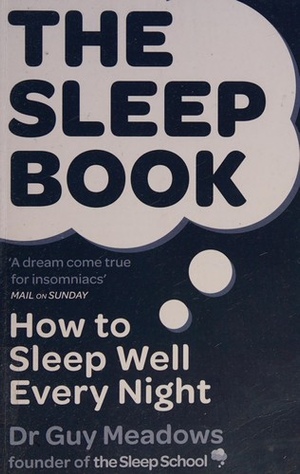
What the book covers
Dr. Guy Meadows has spent over 12,000 hours working with more than 2,000 insomniacs in his Sleep School clinic. This book distills that experience into a five-week program that's less about what you do and more about what you learn not to do.
The core premise is beautifully simple: insomnia feeds on struggle. The harder you fight to sleep, the more elusive sleep becomes. Meadows uses Acceptance and Commitment Therapy (ACT) alongside mindfulness practices to help you shift your relationship with wakefulness. Instead of trying to force sleep, you learn to notice the thoughts and worries that cluster around bedtime, observe them without judgment, and let them pass like clouds across sky.
The five-week structure unfolds gradually. Early chapters explain the neuroscience of sleep and why conventional approaches often backfire. Meadows walks you through why "sleep hygiene tips" alone don't work for chronic insomnia: they can actually intensify the anxiety that keeps you awake. Then the program moves into practical territory: how to practice acceptance, how to train your mind to stop fighting, how to break free from the cycle of checking the clock at 3 a.m. feeling despair.
Throughout, he weaves real stories from his clients. A woman who hasn't slept properly in eight years. A man whose racing mind won't quiet. An executive whose "control everything" personality sabotages her sleep. These aren't just anecdotes; they're proof points that his approach works across different temperaments and situations.
The book also addresses the deeper psychology: the shame insomniacs often carry, the desperation that builds over years of sleepless nights, the way insomnia colonizes your identity ("I'm a bad sleeper"). Meadows treats all of this with remarkable compassion. You don't feel judged reading this book; you feel understood.
Who should read this
Read this if: You've had insomnia for months or years. You've tried standard sleep tips and they haven't stuck. You're curious about psychology-based approaches. You want something deeper than "no caffeine after 3 p.m." You've tried medication and either it doesn't work, stops working, or you want an alternative you can build gradually.
Also read this if: You're prone to anxiety, perfectionism, or control-seeking tendencies. You tend to catastrophize about sleep ("If I don't sleep tonight, I'll be useless tomorrow"). You're tired of fighting insomnia and ready to try acceptance instead. You have access to a therapist or are willing to do the work yourself.
Skip this if: You're looking for quick pharmaceutical recommendations. You have a diagnosed sleep disorder like sleep apnea or restless leg syndrome (though this might be a helpful complement to medical treatment). You need a reference book you can jump in and out of. You prefer rigid, prescriptive rules over psychological reframing. You're in acute sleep deprivation crisis (though the book may help long-term).
Strengths and weaknesses
What works brilliantly: Meadows writes like he's having coffee with you, not lecturing from a podium. The science is solid: he's a PhD from Imperial College London, but he never weaponizes jargon. ACT can sound intimidating in academic papers, but here it feels practical and human.
The five-week structure respects the reality that change is gradual. You're not expected to fix your sleep in three days. This pacing means you can actually integrate what you're learning rather than binge-reading and forgetting.
His central insight, that acceptance beats control when it comes to sleep, is quietly radical. Most sleep books say "do these things to sleep better." This book says "stop doing the things that keep you awake, including trying to sleep." For readers stuck in the exhausting cycle of sleep-struggle, this reframe can feel like permission to breathe.
The client stories are masterfully chosen. Each one maps to a different barrier readers likely face. And his honesty about limitations is refreshing. Meadows doesn't claim his method works for everyone or magically rewires your brain in five weeks. He claims it gives you tools to change your relationship with sleep. The humility is earned.
What's harder: The early chapters are heavy on explaining why (the neuroscience of insomnia, how sleep drive works, the anxiety cycle). This is necessary foundation, but readers in acute distress might want faster access to "what to do." Push through; it pays off.
ACT as a framework requires a shift in thinking. If you're someone who wants clear "do this, get that" instructions, the emphasis on acceptance might feel frustratingly abstract. Meadows does his best to translate theory into practice, but some readers will need to sit with discomfort as they learn.
The book doesn't deeply explore when other interventions (therapy, medication, sleep studies) might be necessary. It's positioned as a self-help program, which works beautifully for primary insomnia but might undersell readers with more complex sleep disorders. A caveat paragraph early on would have been valuable.
Finally, the audiobook narration matters here. Because Meadows' voice and warmth are central to the experience, a poorly narrated audiobook could undermine the whole effect. Make sure you preview before committing.
Final verdict
"The Sleep Book" is a genuine standout in the insomnia space. It's science-backed without being cold, practical without being reductive, and compassionate without being patronizing. Dr. Meadows has crystallized years of clinical wisdom into something accessible and genuinely useful.
If you've been awake at 2 a.m., feeling desperate, thinking this is just who you are, this book offers something rare: a framework that doesn't ask you to white-knuckle your way to sleep, but rather to stop fighting and let sleep return naturally. The five-week structure gives you a real roadmap. The exercises are repeatable. The mindset shift is profound.
Is it perfect? No. The early theory chapters will test your patience. Some readers will find the acceptance-based approach too passive. And it's not a substitute for seeing a sleep specialist if you have a diagnosed sleep disorder.
But for the millions who struggle with chronic insomnia and have exhausted conventional wisdom, this book genuinely delivers on its promise. It's warm, it's smart, and it works for the people it reaches.
A solid 3.5-star read that could easily shift to 4.5 stars depending on where you are in your insomnia journey. If you're desperate for change and willing to think differently about sleep, you'll likely find this transformative.