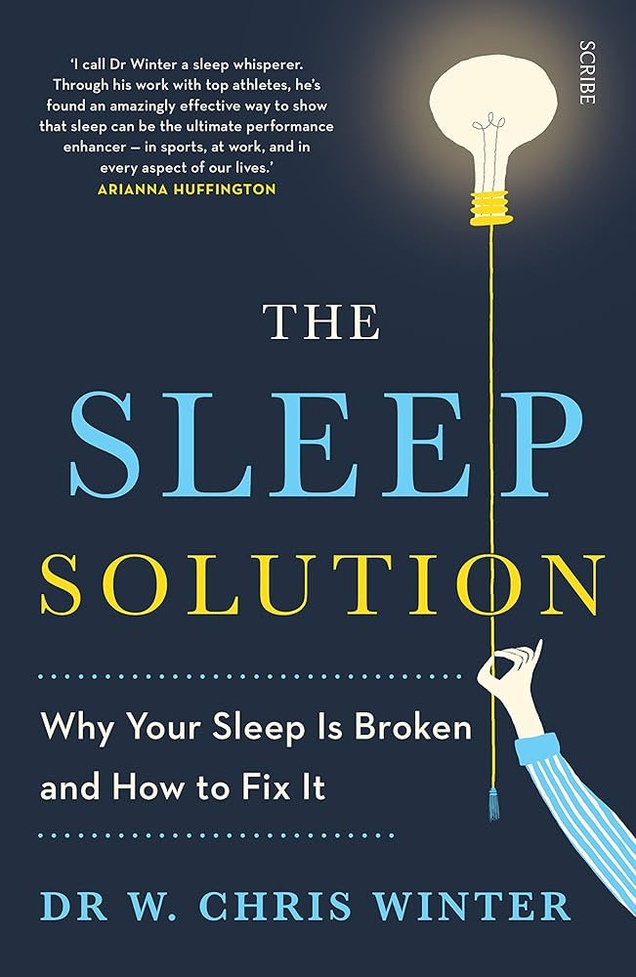
What the Book Covers
W. Chris Winter, MD, is a board-certified neurologist and sleep medicine specialist with nearly 25 years in the field, and it shows. The Sleep Solution pulls back the curtain on why our sleep gets broken in the first place, then offers a clear roadmap to fix it, mostly without pills.
The core insight: insomnia isn't about not being able to sleep. It's about anxiety, hypervigilance, and the vicious cycle they create. You lie in bed, can't fall asleep, panic about not sleeping, and guess what? Now you're even more awake. Winter walks through this loop with warmth and humor, explaining what's happening in your brain and body, then teaching you how to break free.
The book tackles the usual culprits: racing thoughts, irregular schedules, caffeine, screens, the bedroom environment, but goes deeper into the psychological architecture of insomnia. He's a strong advocate for Cognitive Behavioral Therapy for Insomnia (CBT-I), the gold-standard, evidence-backed approach that actually works. And unlike many sleep books, he doesn't just tell you what to do; he explains why it works, which makes sticking to it feel less like punishment and more like science.
Who Should Read This
The Sleep Solution is essential reading if you struggle with insomnia, especially if you've tried medications and want something more durable. Winter's approach is particularly valuable for anyone whose sleep troubles are tangled up with anxiety, which, spoiler, is most of us.
It's also genuinely useful for anyone who wants to understand sleep from a clinical perspective without the academic jargon. The book reads like a conversation with a smart, funny doctor, not a textbook. If you're curious about what a 24-year-old sleep medicine practice actually teaches about the brain-sleep connection, this is it.
The book won't be as helpful if you're dealing with sleep apnea, narcolepsy, or other medical sleep disorders. Winter touches on those but doesn't go deep. And if your sleep issues are rooted in hormonal changes (perimenopause, menopause, for example), you may wish for more specialized guidance.
Strengths and Weaknesses
Strengths:
Winter writes the way you'd hope your best doctor would speak: direct, evidence-based, but genuinely funny. He uses anecdotes from his practice (real patients, real problems) without ever being clinical or detached. The humor disarms defenses. You find yourself laughing at sleep struggles that felt isolating before.
The emphasis on CBT-I over medication is refreshing and, frankly, necessary. Sleeping pills can help short-term, but they don't teach your brain and body how to sleep well again. Winter walks you through the principles clearly enough that you can start applying them immediately, even without a therapist.
The book is also endorsed by major sports organizations (the Dodgers, Rangers, Thunder). That's not just celebrity dust: it says something about Winter's credibility in a field where elite athletes need sleep and can't afford to be foggy. If it works for pro athletes, the logic holds.
Weaknesses:
The book swings hard toward anxiety-driven insomnia and CBT solutions. If your sleep issues stem from untreated sleep apnea, circadian rhythm disorders, or other physiological conditions, you'll feel the gap. Winter mentions these but doesn't go deep, and that's intentional, given his focus, but it's still a limitation.
Some readers, particularly women going through hormonal transitions, felt that Winter's framework didn't fully address their unique challenges. Sleep during perimenopause isn't the same as sleep anxiety in a 35-year-old banker. The book acknowledges this gap but doesn't fill it.
Finally, while the behavioral strategies are sound, the book assumes you have some capacity for self-discipline and introspection. If you're severely depressed, in acute crisis, or unable to regulate your environment (shift work, caregiving, unstable housing), the strategies feel less actionable.
Final Verdict
The Sleep Solution is exactly what sleep nonfiction should be: evidence-based, accessible, honest, and humane. Winter doesn't oversell the solution: he's clear that fixing broken sleep takes patience and consistency. But he gives you the tools, the science, and the encouragement to do it without relying on pills as a permanent fix.
For anyone stuck in the insomnia-anxiety loop, this book is worth the $18-24 investment. It's the kind of book you'll underline, refer back to, and probably recommend to friends at 2 a.m. when they're texting about their own sleep troubles.
Best for: Anyone with insomnia, anxiety-driven sleep issues, or curiosity about what works in modern sleep medicine.
Skip if: You're looking for deep dives into specific sleep disorders beyond insomnia, or if you need highly specialized guidance for hormonal sleep changes.