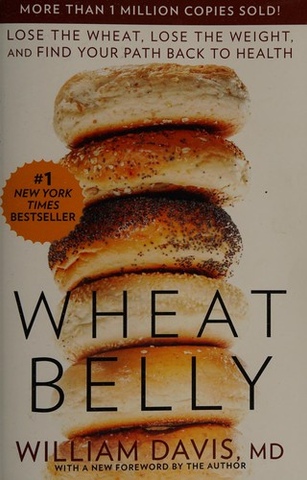
Wheat Belly is one of the bestselling nutrition books of the last fifteen years and, unfortunately, one of the more scientifically problematic. William Davis, a cardiologist who had previously written about heart disease, argues in the 2011 book that modern wheat is the single largest driver of chronic disease in the developed world - responsible, in his telling, for obesity, diabetes, heart disease, arthritis, dementia, acne, and a long list of other complaints. The book sold more than two million copies and inspired a generation of wheat-free eating. It has also been disputed, pointedly and publicly, by most of the mainstream nutrition and cereal-science community. A Mind Wobble review has to be honest about this, even when it is less fun than a straightforward recommendation would be.
What the book covers
Davis's argument runs roughly as follows. Modern wheat, he says, is not the wheat our grandparents ate. It has been hybridised and cross-bred into a dwarf variety that contains a different protein profile, higher levels of a starch called amylopectin A, and a modified form of gluten that behaves differently in the human body. This modern wheat, he argues, is uniquely inflammatory, uniquely addictive (through a proposed opioid-like effect of wheat-derived peptides), and a major driver of visceral fat accumulation - the wheat belly of the title. The book then walks through chronic disease after chronic disease and argues that wheat is implicated in all of them.
The prescription is blunt. Cut wheat from your diet entirely. Replace it with meat, eggs, non-starchy vegetables, nuts, and small amounts of non-wheat carbohydrate. Davis provides a sample meal plan, recipes, and extensive case studies from his clinical practice in which patients dramatically improve after going wheat-free. The anecdotal case studies are a real strength of the book as narrative - they are specific, they are personal, and they are why many readers finish the book convinced. They are also almost entirely unblinded, uncontrolled, and vulnerable to every confound that comes with changing a diet in a substantial way.
Where the science stands
Much of the book's specific scientific content has been contested by researchers with direct expertise. Cereal scientists have pointed out that modern wheat's protein and gluten profile is substantially similar to older varieties - the differences Davis emphasises are real but much smaller than the book implies. The claim that wheat-derived peptides act as opioids in the human body has been investigated and found to be, at best, weakly supported and clinically insignificant for the vast majority of people. The claim that amylopectin A from wheat spikes blood sugar more than pure glucose is based on a misreading of the glycaemic-index literature - glycaemic index measures something narrower than Davis represents.
The one place the book is clearly correct is on coeliac disease and diagnosed wheat sensitivities. For those patients - roughly one percent of the population for coeliac, with a small additional group of non-coeliac wheat sensitivity - avoiding wheat is medically necessary and produces large benefits. Davis is right about this, and useful for those readers. The problem is that he extrapolates from this minority to the entire population, and that extrapolation is not justified by the evidence. For the majority of people without wheat-related medical conditions, the current evidence base does not support the idea that wheat is a major driver of chronic disease.
Who should read this
This is, honestly, not a book we can recommend enthusiastically. If you have coeliac disease or diagnosed wheat sensitivity, you already know you need to avoid wheat, and you will be better served by coeliac-specific resources than by this book. If you are curious about whether you might have an undiagnosed wheat sensitivity, talk to a doctor - coeliac serology is a cheap test that gives a real answer, and a structured elimination-reintroduction trial under professional guidance will tell you far more than a self-directed wheat-free month. If you just want to eat better, cutting ultra-processed foods is doing the heavy lifting in most of the positive stories people tell about going wheat-free, and you can get that benefit without adopting the book's specific framework.
If you do read the book, read it critically. Cross-reference the specific scientific claims with sources like the Harvard T.H. Chan School of Public Health's nutrition pages, or with writers like Tim Spector who engage the same questions with better evidence.
Strengths and weaknesses
The strengths are almost entirely rhetorical. Davis writes clearly, the case studies are vivid, and the book is easy to read. He is also correct that ultra-processed wheat-based products (highly refined flours, bread fortified with sugar and industrial oils, sweetened breakfast cereals) are a real problem in the modern diet.
The weaknesses are substantive. Several central claims are not supported by the evidence. The extrapolation from coeliac patients to the general population is not justified. The book has contributed to a broader climate of unnecessary dietary anxiety that mainstream dietitians spend significant energy correcting. For a reader who takes it too seriously, the book can become a source of unhelpful food fear rather than a path to better health.
A 1.5 reflects an honest assessment. The book is well-written and influential, and it is also more misleading than helpful for the typical reader. Mind Wobble does not fabricate enthusiasm.
Why this matters for mental health
There is a genuine connection between diet and mental health. There is also a genuine connection between restrictive eating, dietary anxiety, and poor mental health outcomes. Books that tell a general audience that an entire common food category is secretly poisoning them tend to do more of the second than the first, especially for readers already prone to health anxiety or disordered eating. For the Mind Wobble reader interested in the nutrition-and-mental-health link, look to the Mediterranean-diet literature or the SMILES trial - both support a broadly whole-foods diet that includes whole grains as part of a healthy pattern.
Final verdict
Wheat Belly is a book to understand as a cultural phenomenon rather than to follow as a guide. The science does not support the main argument for most readers, and the broader climate of fear the book helped create has been unhelpful for public nutrition discourse. If you are drawn to cutting down on ultra-processed food, that is a good instinct - but you do not need this book to do it, and the framework it offers is more restrictive than the evidence warrants. Skip it. Pick up In Defense of Food or The Diet Myth instead.