What the book covers
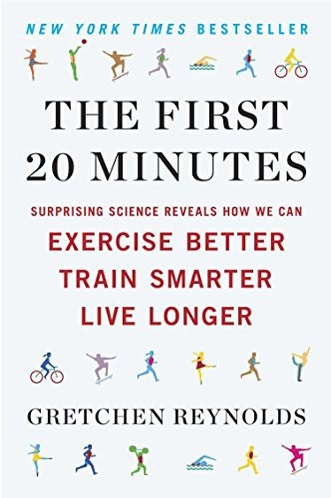
Gretchen Reynolds, the New York Times' beloved "Phys Ed" columnist, takes on the mythology surrounding exercise with surgical precision. She opens with a simple premise: most of what we think we know about working out is wrong. The book then systematically deconstructs these myths, from the notion that you need hours in the gym to get results, to the accepted wisdom about stretching before exercise.
Reynolds explores the science of how exercise affects your body at a cellular level. She discusses how motion changes your DNA expression, activates genes associated with muscle development, and triggers physiological cascades that extend far beyond the gym. The chapters move through different aspects of fitness (cardiovascular training, strength building, flexibility, and recovery) each revealing surprising research that contradicts conventional wisdom.
One of the book's central findings is that you don't need nearly as much time as you think. Twenty minutes of moderate cardio might be all you need. In some cases, even six minutes of intense activity produces measurable benefits. This runs counter to the entrenched fitness culture that demands hour-long sessions, making it particularly liberating for time-pressed adults.
Reynolds also discusses how exercise influences mental health, showing that physical activity can be as effective as medication for managing anxiety and depression, with effects that ripple through your mood, focus, and cognitive function for hours after a workout.
Who should read this
This book is essential reading for anyone who's ever felt guilty about not having time for a proper workout, or who's questioned the conventional fitness wisdom they've absorbed. It's particularly valuable for busy professionals, parents, and anyone managing competing priorities who needs permission to exercise smarter, not just longer.
The book also serves fitness enthusiasts well. If you're already committed to training, Reynolds provides the scientific underpinnings that make you understand not just what to do, but why it matters. Beginners will find the approachable writing style encouraging, while skeptics will appreciate the rigorous research backing every claim.
Anyone interested in the intersection of exercise and mental health will find particular value here. Reynolds doesn't just talk about physical fitness: she explores how movement reshapes your neurobiology, affecting everything from emotional resilience to cognitive performance. For those seeking evidence that their workout routine is doing more than just building muscle, this book delivers both science and hope.
Strengths and weaknesses
The book's greatest strength is its myth-busting clarity. Reynolds cuts through the noise of fitness marketing and pseudoscience with research-backed evidence. She's interviewed respected exercise physiologists, sports scientists, and neurobiologists, and she synthesizes their work into practical takeaways you can use immediately. The writing is conversational without being dumbed-down: complex concepts are explained clearly without losing accuracy.
The connection to mental health is particularly well-handled. Reynolds doesn't oversell the mental health benefits of exercise, but she presents them clearly and evidentially. She explains how cardiovascular activity influences neurotransmitter production, how strength training builds resilience (both physical and psychological), and how movement buffers against anxiety and depression. This holistic view lifts the book beyond typical fitness literature.
The practical approach is another strong point. Reynolds doesn't lecture endlessly; she provides specific, actionable guidance. Want to know what pre-workout meals actually matter? She'll tell you. Curious if you should stretch? She'll explain why conventional stretching wisdom is backwards.
The weaknesses stem largely from the book's age. Published in 2012, some findings have been updated or refined by newer research. Exercise science has evolved, particularly in areas like high-intensity interval training and the emerging field of exercise genomics. Some of the studies Reynolds references are older still, and while solid, they've been superseded by more recent investigations.
Additionally, Reynolds occasionally simplifies complex physiological processes to make them accessible, which can feel like oversimplification to readers with a background in exercise science or biology. The featured experts are predominantly white and Western, which narrows the perspectives offered on how different populations experience and benefit from exercise.
Final verdict
"The First 20 Minutes" is a genuinely valuable read that will change how you approach fitness. It's not a comprehensive training manual: there are no workouts to follow, no detailed programming. Instead, it's a book of understanding and permission. Permission to exercise less but smarter. Permission to prioritize what actually works over what feels traditional. Permission to see your workout as medicine for both body and mind.
Reynolds makes a compelling case that the barriers to fitness are often psychological rather than physical. You don't need a gym membership or special equipment. You don't need to carve out massive time commitments. What you need is to understand the science, respect your body's remarkable adaptability, and move with intention.
The book's focus on the mental health dimensions of exercise is particularly timely, given what we now know about the bidirectional relationship between physical activity and emotional well-being. In an age of sedentary work and constant digital demands, Reynolds reminds us that motion isn't luxury: it's cellular necessity.
While some research has evolved since publication, the core principles hold up well. The foundational concepts about how exercise works haven't changed, even if our understanding of the mechanisms has deepened. If you're looking for a well-researched, encouragingly written guide that makes exercise science accessible and actionable, this book delivers.
Best for: Anyone juggling too many commitments who needs permission to exercise less and smarter. Fitness enthusiasts seeking the science behind their training. Anyone looking to improve mood, focus, and cognitive function through movement.
Rating: 4.0/5.0. A compelling, well-researched guide that cuts through fitness mythology with clarity and warmth, supported by solid evidence and practical wisdom. The age of some research prevents a higher score, but the core insights remain valuable and actionable.