What the book covers
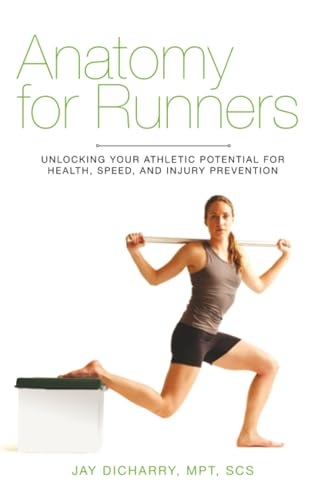
Anatomy for Runners is a deep dive into how your body is built to run, and what often goes wrong. Jay Dicharry, a physical therapist and Director of the SPEED Clinic at University of Virginia, walks you through ten chapters that move from foundational anatomy and running biomechanics into practical assessment and rehabilitation techniques.
The book doesn't just explain how running injuries happen; it helps you understand why they happen to you specifically. Dicharry breaks down running as a series of single-leg squats (which sounds absurd until you realize he's right), explores the role of stability in the lateral and rotational planes, and explains why traditional stretching and strength programs often miss the mark for runners. Then he gives you tools: mobility and stability self-assessments you can do at home, and a progression of corrective exercises with clear photographs showing each move.
The writing is refreshingly human. This is a book by someone who got frustrated with ineffective running injury treatments and decided to synthesize everything he knew from clinical work, biomechanical analysis, and coaching. It shows. He's not trying to dazzle you with credentials; he's trying to help you understand your body.
Who should read this
If you run, seriously or casually, this book has something for you. It's especially valuable for runners who've had injuries or suspect they're at risk, runners who want to understand what's actually happening in their body rather than just following a generic training plan, and anyone who's ever looked at their running gait and thought, "Is this normal?"
You'd also benefit if you're the type who likes to understand the "why" before you do the "what." Anatomy for Runners respects that impulse. It assumes you're intelligent and curious, and gives you the depth to back up its recommendations.
That said, this isn't a light read. If you want a quick book you can skim on a treadmill, look elsewhere. Commit some focused time to this one.
Strengths and weaknesses
The best parts: The assessment protocols are gold. Being able to identify your specific weaknesses (whether it's glute strength, hip mobility, ankle stability, or single-leg balance) changes everything. Instead of a generic workout, you're doing corrective work targeted to your actual imbalances. The exercises are practical and progressable; you're not going to be flipping between six different resources to figure out if you're ready for the advanced version. And the anatomical explanations genuinely illuminate why things matter. Once you understand that running requires rotational stability and that most runners neglect this completely, it reframes how you think about training.
The tricky bits: Dicharry makes his core arguments repeatedly. The book could have been more efficiently written: some readers feel like they're reading the same chapter three times. The first 200 pages, while intellectually interesting, don't contain the essential information if you're primarily interested in the self-assessments and exercises. And the book is dense. This isn't light reading; it requires engagement and probably a second pass through certain chapters.
There's also a subtle limitation: this book works best if you're able to honestly assess your own movement patterns. Some people excel at this; others would benefit from a physical therapist's eye. The book acknowledges this but doesn't fully address it.
A note on mental health and body literacy
Here's something people don't talk about enough: understanding your body's mechanics builds genuine confidence and reduces anxiety around training. When you know why you need stability work instead of just guessing, when you can assess your own movement and see improvement, there's a psychological shift. Injury prevention isn't just about avoiding pain; it's about the mental ease of knowing your body is resilient and capable. And when running is part of your identity (as it is for many), confidence in your body's integrity directly supports mental well-being. Dicharry's emphasis on body literacy (really knowing your biomechanics instead of just running blind) is, in a quiet way, an investment in mental health.
Final verdict
Anatomy for Runners is the book to read if you're serious about understanding running biomechanics and taking control of injury prevention. It's well-researched, compassionately written, and genuinely useful. You'll learn things that will change how you train. The only caveats are that it requires real attention and that some people find the repetition frustrating, but those are small prices for the depth and practicality you get in return.
This is the book that makes you stop running blindly and start running with intention. Alan Webb, the American record holder in the mile, said it plainly: "This is the best resource on running biomechanics and injury prevention." He's not wrong.
If you're a runner, you should own this book. Even if you don't read it cover-to-cover, the assessments and exercise progressions alone make it indispensable.