What the book covers
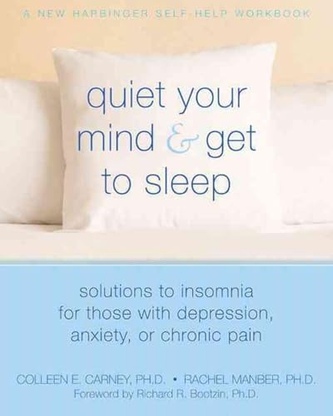
"Quiet Your Mind and Get to Sleep" cuts straight to the heart of insomnia: the vicious cycle of worrying about sleep until the worry itself becomes the problem. Carney and Manber, both leading sleep medicine researchers, guide you through the cognitive behavioral therapy (CBT) techniques that sleep specialists actually use in their clinics, and they do it in a way that feels like talking to a knowledgeable friend, not reading a textbook.
The book is structured as a workbook, which means you're not just reading about insomnia, you're actively working through your own sleep patterns. You'll learn how to optimize your sleep schedule, identify the behaviors that are stealing your sleep, and practice the mental techniques that quiet the racing thoughts keeping you awake. What makes this different from other sleep books is the explicit focus on insomnia in the context of real life: depression, anxiety, chronic pain. The authors understand that for many of us, sleep problems don't exist in isolation.
The content moves through three core areas. First, you understand what insomnia actually is (and often, what it isn't). Then, you learn stimulus control and sleep restriction: the foundational behavioral techniques that flip the sleep/wake switch. Finally, you work through the cognitive strategies for managing the thoughts and worries that feed insomnia, especially when other conditions are complicating the picture.
Who should read this
If you're wrestling with insomnia, especially if it's tangled up with anxiety, depression, or chronic pain: this book is for you. It's particularly valuable if you've tried sleep medication and either had side effects, hit tolerance, or just wanted something more lasting than a pill.
This is also a solid choice if you're naturally skeptical of wellness advice and want something grounded in actual clinical research. The authors don't promise miracles. They promise a systematic approach that works because it's been tested.
You should probably skip this if you're looking for quick fixes, meditation scripts, or sleep stories. This is work. Good work, but work. It requires you to complete worksheets, track your sleep honestly, and sometimes sit with discomfort as you retrain your brain around sleep.
Strengths and weaknesses
Strengths:
The biggest strength here is the authors' credibility combined with their ability to translate complex neuroscience into plain language. Carney and Manber aren't selling you a system they invented: they're teaching you what actually works in sleep medicine clinics. That matters. The workbook format, while potentially repetitive for some, is also a strength: it forces engagement rather than passive reading. You can't just skim this and hope for results.
The book also deserves credit for taking the comorbidity angle seriously. So many sleep books ignore the fact that if you have anxiety or depression, you can't just "relax into sleep." The authors get this and build their approach accordingly. The practical worksheets are genuinely useful for identifying your personal sleep patterns and the specific behaviors keeping you stuck.
The writing is warm and non-judgmental, which matters when you're already frustrated about not sleeping. There's no shame-mongering here, just "here's what's happening, here's what to do about it."
Weaknesses:
The workbook format, while helpful for engagement, can feel a bit dry and repetitive if you're already familiar with CBT principles. If you've worked with a therapist before, some of this ground might feel familiar, and you might want something more condensed.
The book was published in 2009, which shows in some areas. There's no meaningful discussion of sleep trackers, fitness watches, or the (let's be honest) genuinely complicated relationship many people have with sleep data now. For someone obsessively monitoring their sleep on an Apple Watch, the book's techniques might need supplementing.
Some reviewers have noted that the section on managing awakening in the middle of the night feels thinner than the advice on falling asleep initially. If midnight insomnia is your specific struggle, you might need additional resources.
And here's the real weakness: this requires work. If you're hoping to read a book and magically sleep better, you'll be disappointed. The CBT techniques work, but they require actually doing the exercises, tracking your sleep, and staying consistent even when it feels frustrating.
Final verdict
This is a thoughtful, credible workbook from researchers who actually understand sleep medicine. It's not flashy, it's not trendy, and it won't promise you that sleeping will be "easy" after reading it. What it will do is give you the same evidence-based tools that sleep specialists use, presented in a way you can actually apply on your own.
The 3.9-star Goodreads rating reflects its true nature: genuinely helpful for most people who use it as intended, but not a miracle cure, and potentially frustrating for those expecting something quicker or easier. The reviews cluster around the same themes: "It works if you do the work," "Practical and based in real science," and occasionally, "Too much like a workbook, not enough like a book."
For anyone with insomnia, particularly if anxiety or depression are part of your story: this deserves a place on your bedside table. Not as something to read in bed (that's counterproductive), but as something to work through seriously, with pen in hand, ready to retrain the part of your brain that's keeping you awake.
The science is sound. The advice is actionable. The only mystery here is whether you'll actually do the work. If you will, sleep will likely follow.