What the book covers
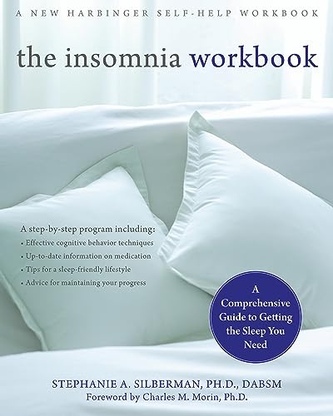
The Insomnia Workbook is a hands-on guide designed to walk you through cognitive behavioral therapy for insomnia (CBT-I): the same approach sleep specialists use with their clients. Rather than offering another collection of tired sleep advice, Silberman structures the book like an actual therapy session: assessment first, then action.
You'll start by evaluating your sleep habits with questionnaires and honestly assessing how insomnia affects your daily life. From there, the book introduces evidence-based techniques that address the root causes of most chronic insomnia. These include stimulus control (retraining your brain's association with bed), sleep restriction (strategically limiting time in bed to rebuild sleep efficiency), sleep hygiene modifications, and cognitive tools for quieting racing thoughts.
Throughout the 224 pages, you'll find sleep logs to track patterns, worksheets to apply concepts to your own situation, and clear explanations of the neuroscience behind why these techniques work. The book also explores how lifestyle factors (caffeine, alcohol, exercise timing, and stress) quietly sabotage sleep, and provides practical strategies to address them.
Who should read this
This book is ideal for anyone tired of band-aid solutions to insomnia. If you've been reaching for sleep medications, white noise machines, or expensive bedding with little lasting improvement, CBT-I offers a different, and scientifically proven: path forward.
It's particularly helpful if you:
- Lie awake for hours worrying you won't sleep (which paradoxically makes it worse)
- Have irregular sleep schedules or struggle with weekend/weekday inconsistency
- Want to understand why your sleep is broken before attempting fixes
- Prefer non-pharmaceutical approaches
- Have some baseline comfort with self-reflection and journaling
The workbook format makes it accessible to beginners, though readers already familiar with CBT principles may find some sections repetitive. It's not a quick read: you'll get the most from working through exercises and maintaining the sleep logs over several weeks.
Strengths and weaknesses
What works: Silberman's biggest strength is making CBT-I practical and actionable. The sleep logs are genuinely useful for identifying patterns you might otherwise miss. The explanations of why your brain latches onto insomnia, and how to interrupt that cycle: are clear without being patronizing. Readers consistently report solving sleep problems that persisted for decades using these techniques.
The book's structure mirrors real therapy, which means you're not just learning concepts in isolation; you're building skills progressively. That matters. By the time you reach the cognitive tools section, you've already established baseline habits that make mental techniques actually work.
Where it falls short: Some readers find the material repetitive, particularly if they've already studied CBT. The 2009 publication date shows: the research citations are solid but somewhat dated. There's minimal discussion of how medical conditions (sleep apnea, restless leg syndrome, chronic pain) or medications interact with these techniques, which limits usefulness for people managing multiple health issues.
The book also assumes a fairly stable schedule, which isn't realistic for shift workers or people with unpredictable routines. And while the writing is accessible, the workbook density means it requires genuine engagement: you can't skim and expect results.
Final verdict
The Insomnia Workbook delivers what it promises: a practical, evidence-based pathway out of insomnia. CBT-I works. Multiple studies confirm it outperforms sleep medications for long-term improvement, and Silberman makes the approach genuinely accessible. If you're willing to put in the work (completing questionnaires, maintaining sleep logs, and actually applying the techniques rather than just reading about them), this book can be transformative.
It's not a quick fix, and it's not a book to passively consume. But for anyone serious about reclaiming their sleep without medication, it's exactly what you need.
Score: 3.9 out of 5
The 3.9 rating reflects solid, practical value with the caveat that results depend entirely on your commitment to the workbook approach. If you engage with it fully, your experience will likely trend higher. If you're seeking inspiration rather than instruction, it may feel less impactful.