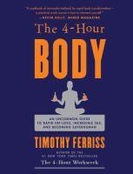
What the Book Covers
The 4-Hour Body is Timothy Ferriss's deep dive into physical optimization through what he calls "the minimum effective dose": the smallest intervention that produces measurable results. Divided into thematic sections, the book tackles fat loss (especially his famous Slow-Carb Diet), muscle gain (the "Minimum Effective Volume" strength protocol), sexual performance and arousal, sleep quality, and injury prevention.
Ferriss peppers the text with case studies of his own experiments, anecdotes from athletes and body hackers, and references to research papers. The book reads like a collection of protocols and hacks rather than a cohesive philosophy, and that's intentional. He's explicit that you're meant to test these ideas on yourself, measure the outcomes obsessively, and keep what works.
Who Should Read This
This book is for the self-directed experimenter who views their body as a laboratory. If you're the type to track sleep, calories, or heart rate variability; if you're skeptical of "just trust the experts" advice; if you're willing to try odd-sounding interventions: you'll likely find something actionable here.
It's not for people seeking a holistic, evidence-heavy fitness foundation. This is niche, focused on rapid results, and sometimes contentious. It's also not a feel-good motivational read; it's prescriptive and dense.
Strengths and Weaknesses
Strengths:
- Relentlessly practical. Every protocol comes with specifics: exact macros, exercise sets and reps, sleep timing. You're not left wondering how to apply the ideas.
- Challenges orthodoxy without apology. Ferriss isn't afraid to say "conventional wisdom is wrong for this," backed by references and his own results.
- The self-measurement ethos is powerful. By encouraging readers to track outcomes and iterate, he teaches a mindset that extends far beyond fitness.
- Sleep chapter is excellent. The discussion of REM-sleep cycles, temperature optimization, and recovery tactics alone justifies picking up the book.
Weaknesses:
- Cherry-picked evidence. While Ferriss cites research, he often showcases studies supporting his view while downplaying contradictions. The book reads selectively scientific rather than rigorously so.
- Some claims are overblown. "Incredible sex" and "becoming superhuman" are marketing hyperbole that undermine credibility. Reality is more modest.
- Lacks nuance on individual variation. What worked for Ferriss, or for his cohort of athletic, well-resourced test subjects: may not work for you. The book doesn't adequately address genetics, contraindications, or why his methods might fail.
- Dense and scattered. With sections on everything from slow-carb eating to toe exercises, it reads like a reference manual rather than a narrative. Many readers find it overwhelming.
The Self-Experimentation Connection to Mental Health
Here's where this book touches something deeper: the act of self-directed experimentation, measurement, and iteration fosters psychological agency. When you take control of a measurable part of your life (your sleep, your body composition, your energy), you reclaim a sense of efficacy. That's potent for mental health.
Sleep quality, in particular, cascades into mood, anxiety, and resilience. Ferriss's focus here (and the Slow-Carb Diet's impact on blood-sugar stability) indirectly addresses emotional regulation. Physical capability and appearance also influence self-image and confidence. These aren't the core focus of The 4-Hour Body, but they're woven through it. If you approach the book as a toolkit for reclaiming agency over your physical life, you'll find a real psychological benefit, which, in turn, buffers against depression and anxiety.
Final Verdict
The 4-Hour Body is a polarizing, useful, and occasionally overstated guide to rapid physical change. It's strongest for people who already love self-experimentation and weakest for people seeking a balanced, evidence-first approach. The Goodreads rating of 3.71 out of 5 reflects this split: fans swear by it; skeptics find it pseudoscience dressed up with citations.
Ferriss's real gift isn't any single protocol: it's teaching you to think like a scientist about your body. If that appeals to you, there's real value here. If you want a single, mainstream-endorsed fitness plan, go elsewhere. But if you're willing to test, measure, and adapt, The 4-Hour Body gives you permission and tools to do exactly that.
The book has aged reasonably well (15 years old now). Some advice predates newer research on protein synthesis, for instance, but the core ethos (measure, iterate, optimize) remains sound. Just read with a critical eye, and don't mistake anecdote for certainty.